Kitchen wrapping, explained. Before you spend a penny.
Wrapping the kitchen you already have takes days, not weeks. This is the complete guide to kitchen wrapping, also known as vinyl wrapping or kitchen door wrapping: how it works, how pricing works, the finishes available, how long it lasts, and how to know whether it is right for your kitchen.
A kitchen that's structurally fine but looks tired is one of the most common reasons people start pricing up a full replacement, then stop when they see the quote. This guide covers exactly what kitchen wrapping is, what it costs, which finishes are most popular, what actually happens on installation day, how durable the result is, and how it compares to respraying or replacing, so you can work out whether it's right for your kitchen before you get in touch.
Kitchen wrapping is the process of resurfacing your existing kitchen with professional architectural film instead of replacing it. The film, sometimes called vinyl wrap, bonds directly to your cabinet doors, drawer fronts, end panels, plinths and even worktops, and completely transforms the look. The carcasses stay, the layout stays, and only the surface changes. People search for this under many names, kitchen wrapping, kitchen wraps, kitchen door wrapping, vinyl wrapping, kitchen facelift or kitchen cupboard wrapping, but it is all the same process. Whichever term you use, the job itself is best left to an experienced kitchen wrapper, since the quality of the prep and edge finishing is what separates a wrap that lasts a decade from one that peels within a year.
The result looks and feels like real wood, stone, marble or painted matt, because the films are engineered to replicate those materials in both appearance and texture. You choose from over 1,000 finishes, and Velfi posts real samples to your door so you can see them in your own kitchen light before committing. The full service detail lives on the kitchen wrapping Cambridge page.
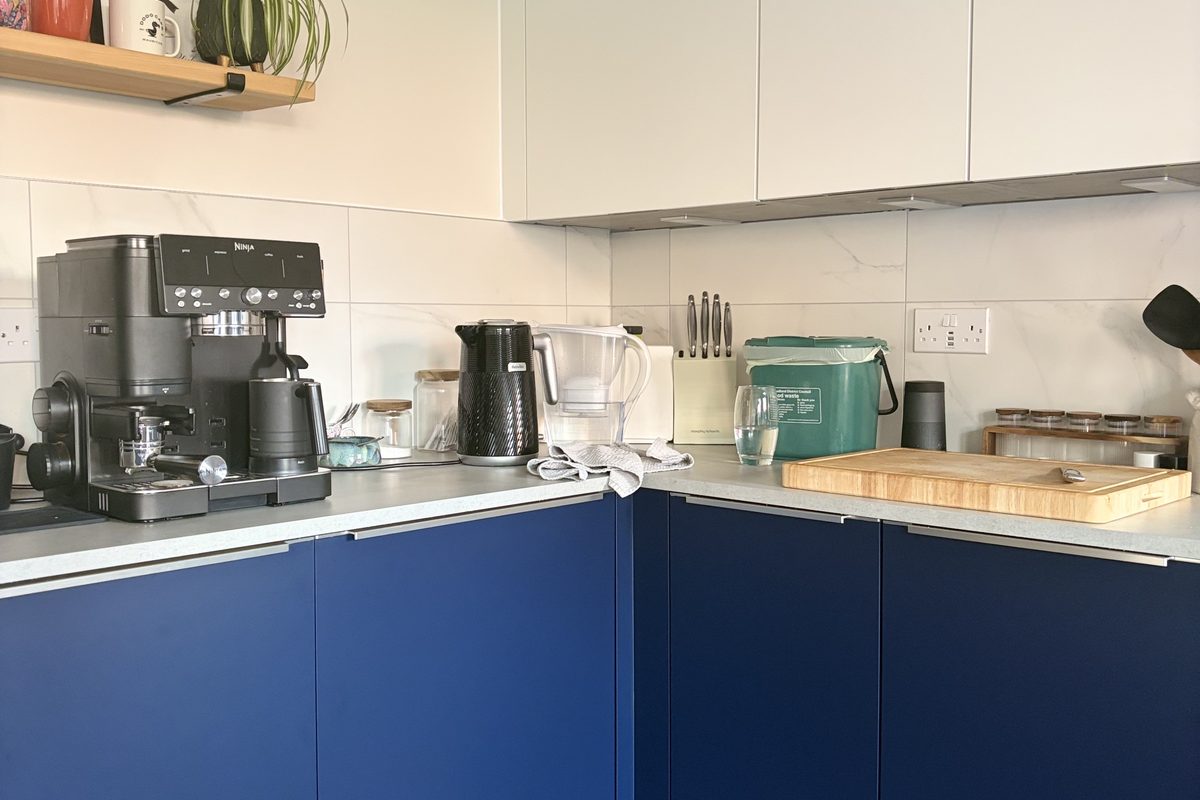
A navy matt kitchen wrap completed in Soham — cabinet doors, drawers and end panels, no demolition.
How much does kitchen wrapping cost?
The honest answer is that it depends on the size of your kitchen, whether you include the worktops, and the finish you choose, and films vary so much that we do not give a figure up front. We suit the film type to your goals, specify the right product and fit it to your budget first. A small galley kitchen with doors only is a quicker, simpler job than a large kitchen with island, worktops and splashbacks included. Every quote is fixed in writing before work begins, with no provisional sums that climb once the job starts. For real figures and what drives the price, read the dedicated kitchen wrapping cost guide.
Days
Days, not weeks, rather than replacing the kitchen outright, for a result that looks the same in every photo and every viewing.
What can be wrapped in a kitchen?
Almost every visible surface. Most clients start by asking Velfi to wrap kitchen doors and drawer fronts, since that single change is the most transformative and the most requested. Worktops can be wrapped in marble, stone, concrete or butcher's block effects, covered in detail in the best worktop wrap finishes guide. Splashbacks, end panels, plinths, kitchen islands and even the kitchen table can all be wrapped. Beyond the kitchen, the same process works on furniture and wardrobes and bathroom units.
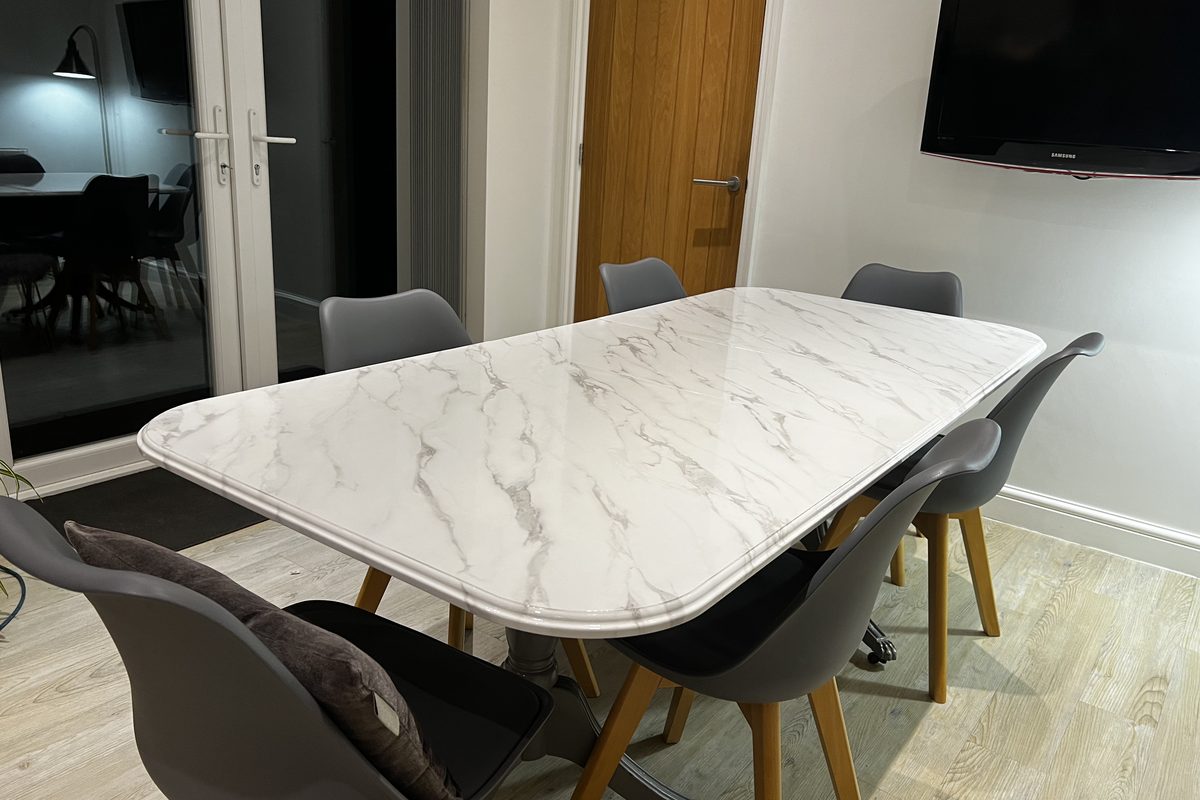
It isn't just cabinets — tables, worktops and splashbacks can all be wrapped in the same visit.
The most popular kitchen wrap finishes
Solid matt colours in navy, sage, clay and off-black are consistently the most requested, giving a modern shaker or handleless kitchen a high-end painted look without the fumes of a respray. Marble and stone effects make the biggest impact on worktops. Warm wood grains suit cottage and country kitchens. And because the films are available in matt, satin and gloss, the same colour can be tuned to the light in your room.
Finish
Look
Best suited to
Solid matt
Flat, high-end painted colour
Shaker and handleless doors
Marble / stone effect
Realistic veining and texture
Worktops, islands, splashbacks
Wood grain
Warm, natural timber look
Cottage and country kitchens
Concrete effect
Industrial, textured finish
Contemporary and loft-style kitchens
Gloss
Reflective, high-shine finish
Modern handleless kitchens
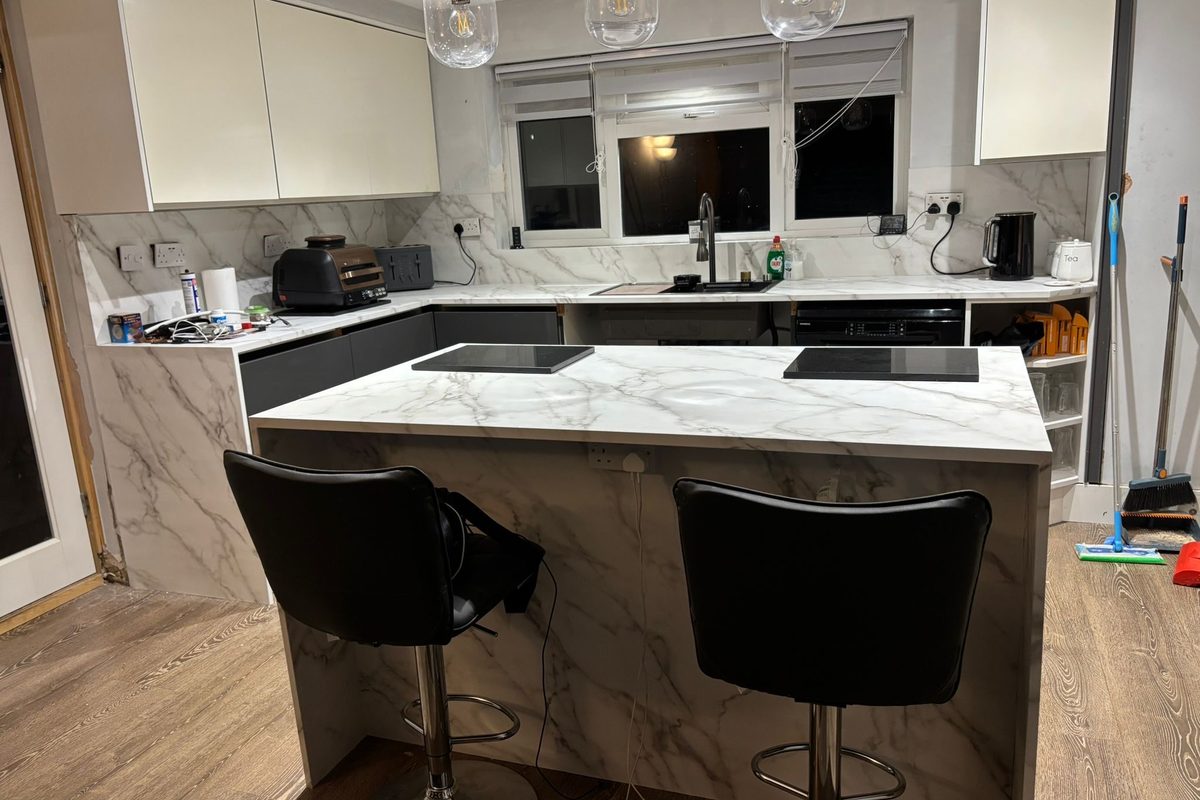
Marble-effect film on cabinet doors and worktop, wrapped in the same visit.
What happens on installation day
Most people have never had a kitchen wrapped before, so here is exactly what to expect once a date is booked.
1. Doors and drawers come off
Each door and drawer front is removed, labelled and taken to a clean working area, usually a garage, van or dust sheet-protected room. The carcasses stay exactly where they are, so the rest of the kitchen is undisturbed.
2. Every surface is cleaned and prepped
Doors, worktops and any other surfaces being wrapped are degreased and cleaned thoroughly. This step is what determines whether the film bonds properly and lasts the full warranty period, so it is never rushed.
3. Film is cut, applied and edge-finished
Each piece of film is cut to size, applied with specialist tools to remove every air bubble, and wrapped fully around the edges rather than trimmed flush, which is what stops it lifting over time.
4. Doors are rehung and the kitchen is checked over
Once the film has bonded, doors and drawers go back on, hinges are adjusted, and the whole kitchen is checked for alignment and finish. Anything that isn't right is corrected before sign-off.
5. The kitchen is usable again
Most kitchens are completed in one to three days depending on size and whether worktops are included, and the kitchen is usable at the end of every working day, so you keep cooking throughout. There is no demolition, no skip, no dust and no builders living in your house for weeks. Compare that to a replacement kitchen, which typically takes two to six weeks with the room out of action for much of it. The full trade-off is laid out in the kitchen wrapping versus replacement guide.
How durable is a wrapped kitchen?
The films Velfi uses carry 10 to 12 year manufacturer warranties and are the same commercial-grade products specified in hotels and hospitals, environments far more demanding than a home kitchen. They resist scratches, moisture and daily wear. If a single door is ever damaged, its film can be replaced individually rather than redoing the whole kitchen, which is not something you can say for a sprayed finish.
How to care for a wrapped kitchen
A wrapped kitchen is looked after the same way as any painted or laminate kitchen, with a few sensible habits that protect the finish for the long term. Wipe spills as they happen rather than leaving them to dry on, especially around the hob and sink. Clean with a soft cloth and a mild washing-up liquid solution, avoiding bleach, white spirit and abrasive scourers, which can dull the surface over time. Use a trivet or board rather than putting hot pans directly on a wrapped worktop, and a chopping board rather than cutting straight onto it. Handled this way, a wrapped kitchen keeps its finish for the full length of the warranty and beyond.
Wrapping versus respraying versus replacing
These are the three routes to refreshing a tired kitchen. Replacing gives you a new layout but costs the most and takes the longest. Respraying changes the colour but gives you one finish, involves fumes, and chips at the edges over time. Wrapping gives you over 1,000 finishes, a longer warranty, no fumes and minimal disruption, and suits most modern doors. For the detailed comparisons, see respray versus wrapping and wrapping versus replacement.
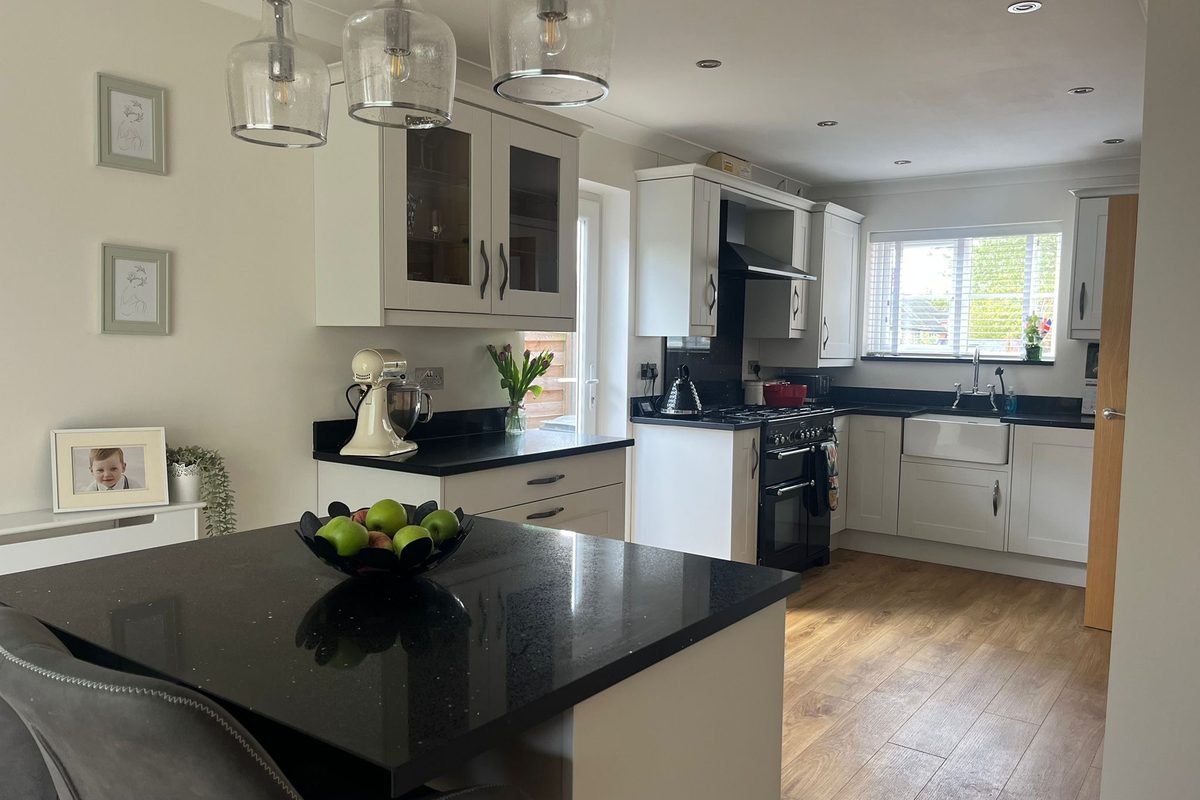
A shaker kitchen finished in clay matt — the inset frame adds a little time per door but doesn't affect the result.
Is wrapping right for your kitchen?
Wrapping is the right choice when your units are sound and what you actually dislike is how the kitchen looks, which is true of the vast majority of kitchens. It is not the right choice if the carcasses are water-damaged, if you need to change the layout, or if your doors are ornate with deep routed mouldings that film cannot follow cleanly. Velfi will tell you honestly at survey which camp your kitchen falls into, before any money changes hands.
Kitchen wrapping across Cambridgeshire
Velfi wraps kitchens across Cambridge and the surrounding towns and villages, including Ely, Newmarket, Huntingdon and St Ives, with no travel charge across the standard coverage area.
Common questions
Questions people actually ask.
Kitchen wrapping, also called vinyl wrapping or kitchen door wrapping, is the process of applying professional architectural film over your existing cabinet doors, drawer fronts, worktops and panels. The film bonds to the surface and completely changes the look in any of over 1,000 finishes, without replacing a single unit.
Film prices vary so much that we do not give a figure before we understand the job. We suit the film type to your goals, specify the right product and fit it to your budget, then you get a fixed quote within 24 hours of seeing photos. Price depends on the number of doors, whether worktops are included, and the finish chosen.
Most kitchens take one to three days depending on size and whether worktops are included. The kitchen is usable at the end of every working day, so you are never left without one.
Yes. The films used are commercial-grade with 10 to 12 year manufacturer warranties, and are the same products used in hotels and hospitals. They resist scratches, moisture and daily use. A damaged door can have its film replaced individually rather than the whole kitchen.
Yes, with worktop-rated film. Marble, stone, concrete and wood-effect worktop wraps are popular and convincing. Everyday precautions still apply, use a chopping board and a trivet, exactly as with laminate.
For most modern flat and shaker doors, wrapping wins on finish choice, durability and warranty, and creates no fumes or drying time. Respraying can be better for ornate doors with deep mouldings. See the kitchen respray versus wrapping comparison for the full picture.
Wrapping suits kitchens where the units are structurally sound and it is only the surface that has dated, which describes most kitchens built since 2005. If the carcasses are water-damaged or you need a new layout, replacement may be the better route, and an honest survey tells you which applies before any money changes hands.