Commercial Washroom Refurbishment
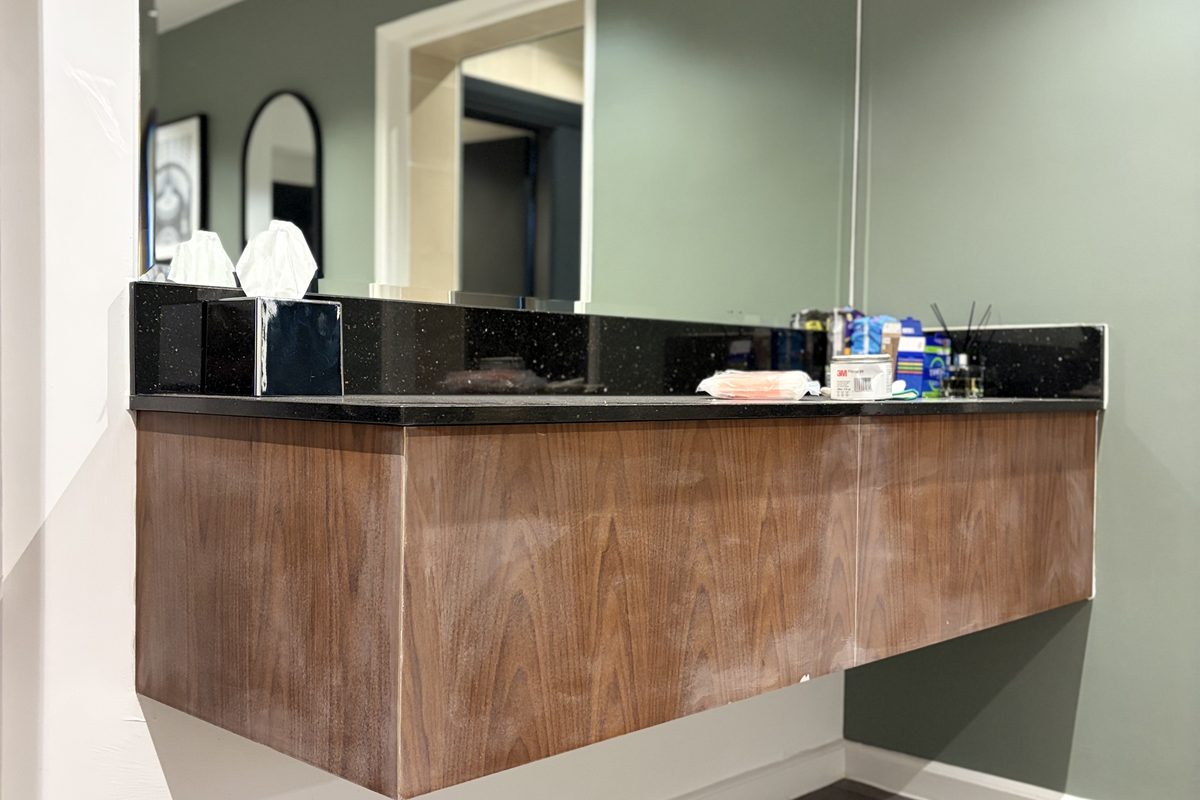
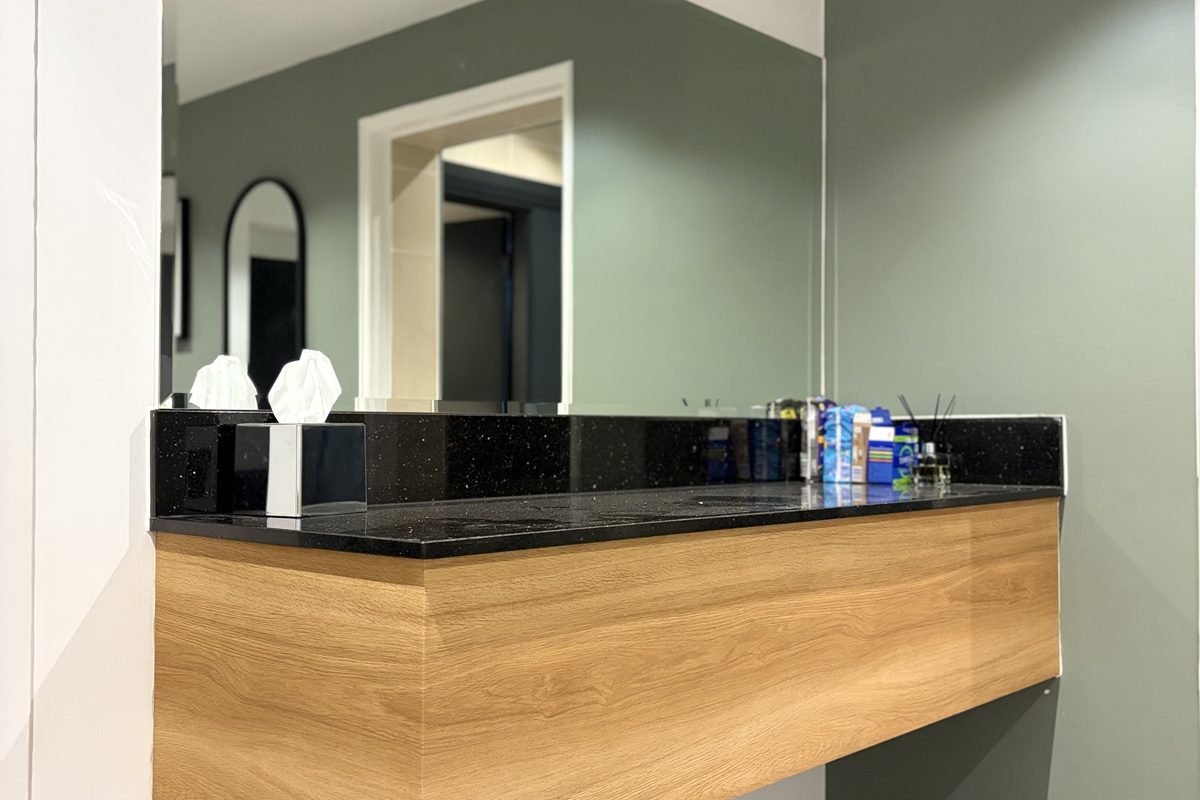
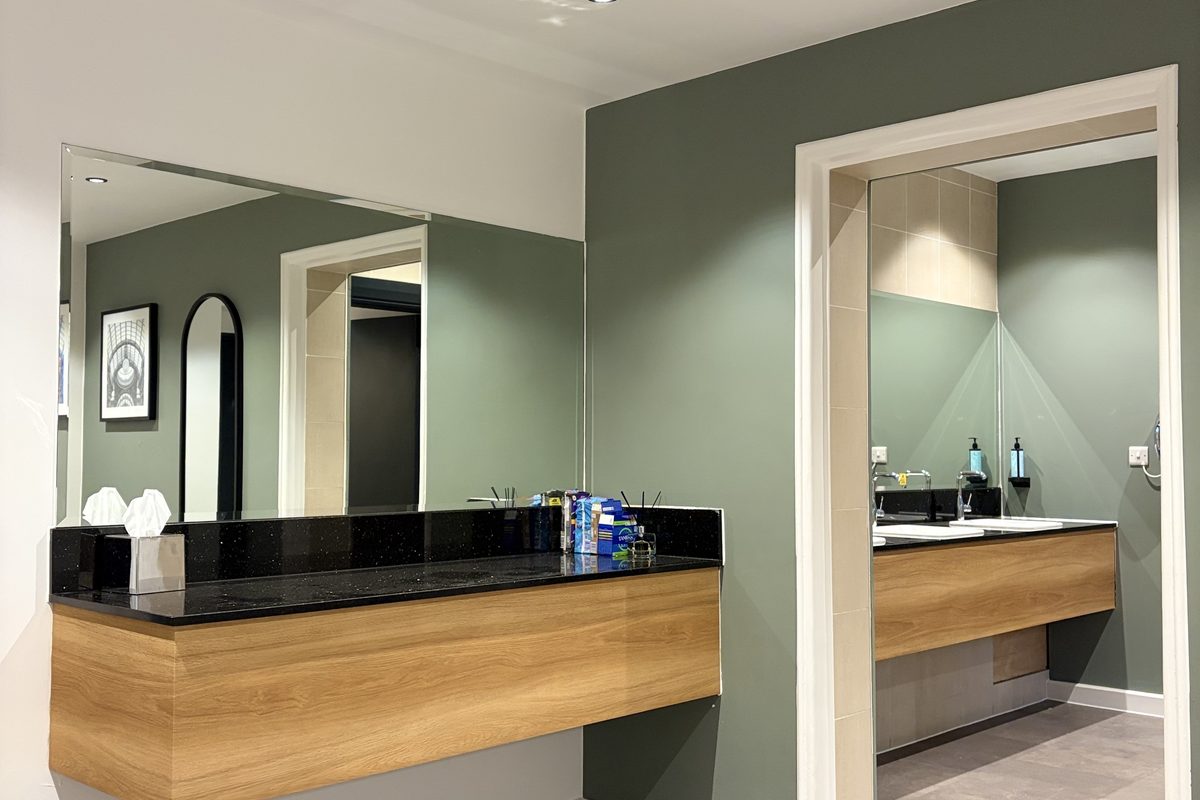
Commercial washrooms date fast and a full strip-out is expensive, slow and puts facilities out of action for weeks. Architectural film transforms cubicle doors, IPS panels, vanity units and wall panels in place — waterproof, hygienic and durable enough for the heaviest commercial use.
Why wrap washrooms instead of refitting
A traditional washroom refit means ripping out cubicles, vanities and panelling, disconnecting plumbing, and fitting replacements. It is a major project that puts the washroom out of service for the duration, and on a large building that can mean weeks without a usable facility.
Wrapping keeps every fixture exactly where it is. Architectural film bonds directly to cubicle doors, partitions, IPS panels and vanity units, so only the surface changes — the plumbing, the carcasses and the layout stay untouched. The washroom can stay in use throughout, phased cubicle by cubicle if needed, and the result looks identical to new without a refit.
The films used are waterproof, resistant to cleaning chemicals, and hygienic. Unlike chipped or delaminating laminate, they do not harbour bacteria in exposed edges and damaged surfaces — a genuine advantage in any washroom that sees heavy daily use.
Where commercial washroom wrapping works
Refreshed between lease events or as part of a wider office refurbishment.
Guest-facing washrooms brought up to standard without closing rooms.
High-traffic facilities refreshed during term breaks.
Hygiene-critical environments where non-porous, cleanable surfaces matter most.
Customer-facing facilities refreshed with zero trading downtime.
Large blocks of shared bathrooms brought to a consistent standard between tenancies.
Hygiene, durability and compliance
The films used in washroom environments are non-porous, fully waterproof and resistant to commercial cleaning products, including bleach-based solutions. They do not chip or delaminate the way ageing laminate does, which means no exposed MDF edges left to soak up moisture and harbour bacteria.
For healthcare and education environments in particular, this hygiene advantage is a genuine compliance benefit, not just a cosmetic one. Full RAMS and health and safety documentation are provided as standard for every commercial washroom project.
Resistant to steam, moisture and splashing, with no risk of delamination at the edges.
Stands up to standard commercial cleaning products, including bleach-based disinfectants.
RAMS and health and safety documentation provided as standard for every project.
Residential bathrooms
This page covers commercial washroom programmes. For a residential bathroom transformation for homeowners across Cambridge, see the bathroom wrapping service.
Straight answers
Most commercial toilet cubicles are made from laminate, melamine-faced board or similar materials, and film bonds to them well. That means cubicle doors, panels and pilasters, IPS panels behind the basins, vanity units and washroom doors can all be refreshed in place, without ripping anything out.
It is also one of the biggest visible upgrades you can make to a building. A tired, chipped washroom changes how visitors judge everything else.
| Washroom surface | Can it be wrapped? |
|---|---|
| Laminate or melamine cubicle doors and panels | Yes |
| IPS panels and boxed-in pipework | Yes |
| Vanity units and worktops | Yes, using wet-area-rated film |
| Washroom doors | Yes, with fire-rated film where required |
| Stainless steel or metal panels | Yes, cleaned and keyed |
| Swollen, water-damaged or crumbling board | No. It needs repair or replacing first. |
Yes, in commercial and domestic bathrooms. The film must be rated for wet areas, because not every film suits damp rooms. We specify the right one and confirm it in writing. For home bathrooms, see bathroom wrapping.
Hygiene
Wet-area film has a non-porous surface that does not hold bacteria the way chipped laminate with open edges does, and it is easy to clean with standard washroom products. The key is the specification. Not every film is waterproof and chemical-resistant, so we confirm the right grade for washrooms and name it in your quote.
That also covers cleaning. Use the cleaning products your contractor already uses, avoid abrasive pads, and report any lifting edges early. A properly installed film will not lift, but a quick check keeps it that way for years.
Programme
The usual approach is to work washroom by washroom, or block by block, out of hours, so the building is never left without facilities. Larger programmes, such as a multi-floor office or a campus, are phased and agreed in writing before any work starts. See office refurbishment and the commercial wrapping guide for how this fits into wider programmes.
Common questions
Yes. Both the doors and the partition panels can be wrapped, giving the entire cubicle run a consistent new finish.
Yes. The films used in washroom environments are fully waterproof and resistant to steam, moisture and splashing. They are also resistant to standard commercial cleaning chemicals.
Not necessarily. Work can be phased so that some cubicles remain in use while others are being wrapped. For single washrooms, work is scheduled outside peak hours.
A typical commercial washroom with 4 to 6 cubicles plus vanity units takes 1 to 2 days depending on scope. Larger washroom programmes are phased across the building.
Solid matt colours in light grey, white and anthracite are the most popular for a clean, modern look. Stone and concrete effects also work well on vanity units.
Our work
Areas covered
Commercial installation available nationwide.
Related services
Get started
Send photos and a rough cubicle count. A fixed quote and phased programme proposal comes back within 24 hours.
Get a Free QuoteCall 01223 944335