Solar window film in Cambridge. Cut the heat, keep the light.
Overheating rooms, blinding glare, fading furniture. Solar window film, also called solar control film, addresses all three with little or no change to how your windows look from the outside, depending on the film. Applied directly to existing glass, it reduces solar heat gain, cuts glare and blocks over 99% of UV radiation. No replacement glazing. No building work. One day installation in most cases.
Stop heat before it gets in. Without losing the light.
Solar window film works by selectively blocking the infrared and UV wavelengths that cause heat and fading, while letting visible light through. With a neutral film the glass looks very close to untreated glass from the outside. From inside, the room stays bright but is cooler and more comfortable.
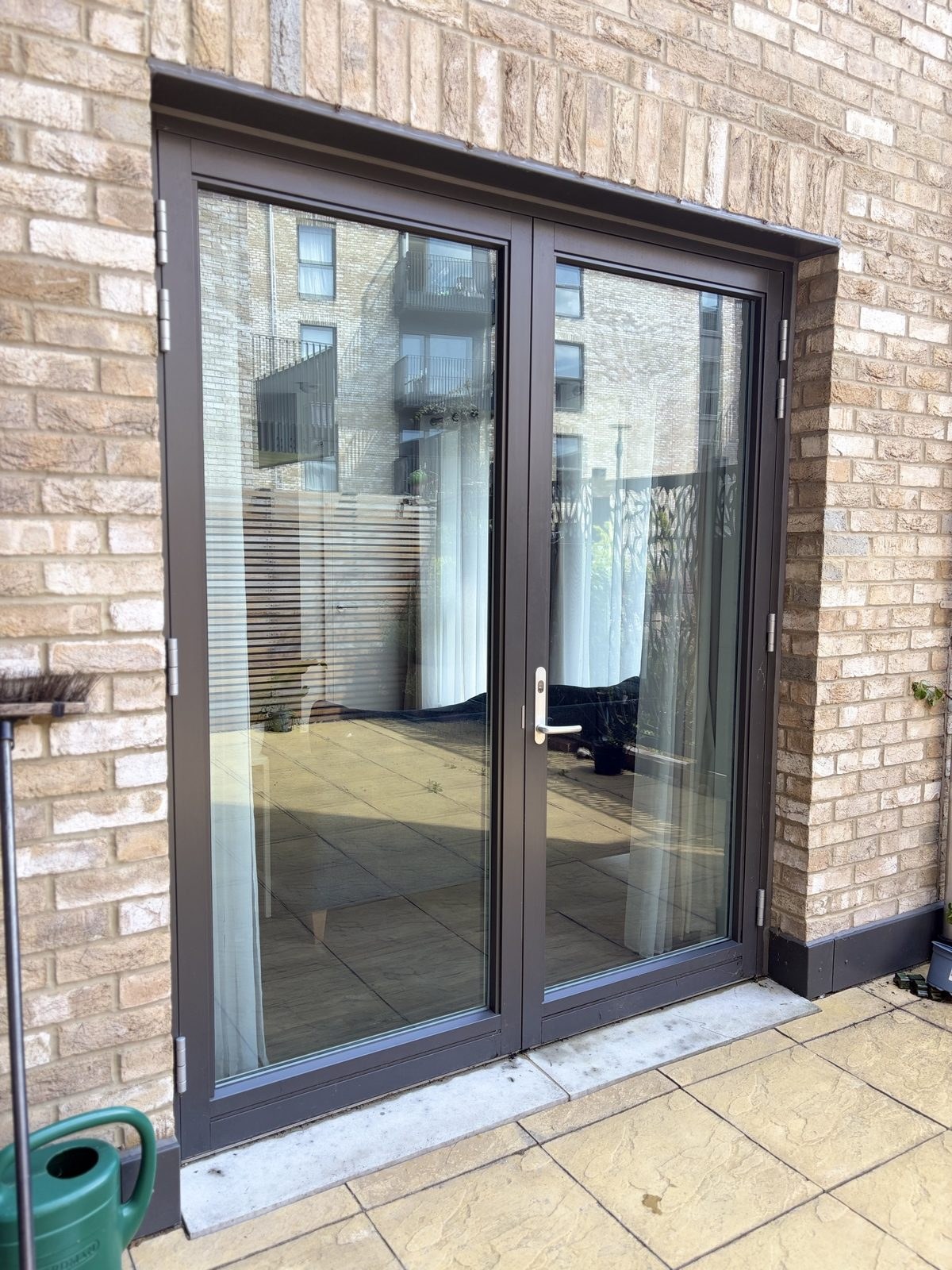
It is fitted to existing glass without structural changes. Most domestic and office jobs are done from inside the room, and an exterior-grade film is used where the glass or the access calls for it. Single glazing suits most films, while double and triple glazed units need the film checked against the glass first. Most jobs take under a day.
Rejects around half or more of the solar energy hitting the glass on quality films, depending on the film and glass
Cuts visible glare for screens, workspaces and living areas
Blocks over 99% of UV radiation, which slows fading of furniture, flooring and artwork
Maintains natural light and outward visibility
Fits existing glass, with the film matched to the glazing type
Where it gets installed
South and west-facing rooms that overheat in summer
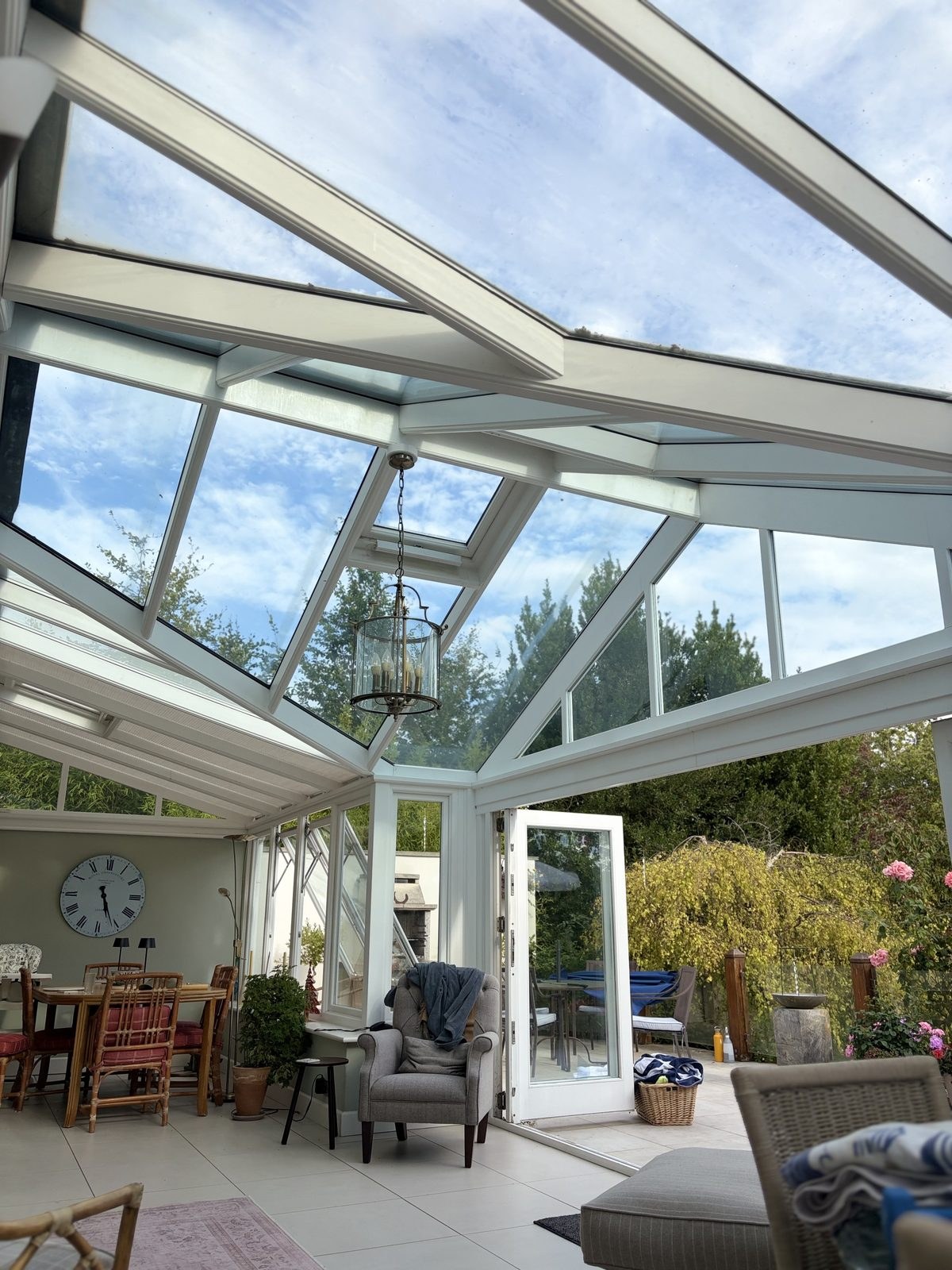
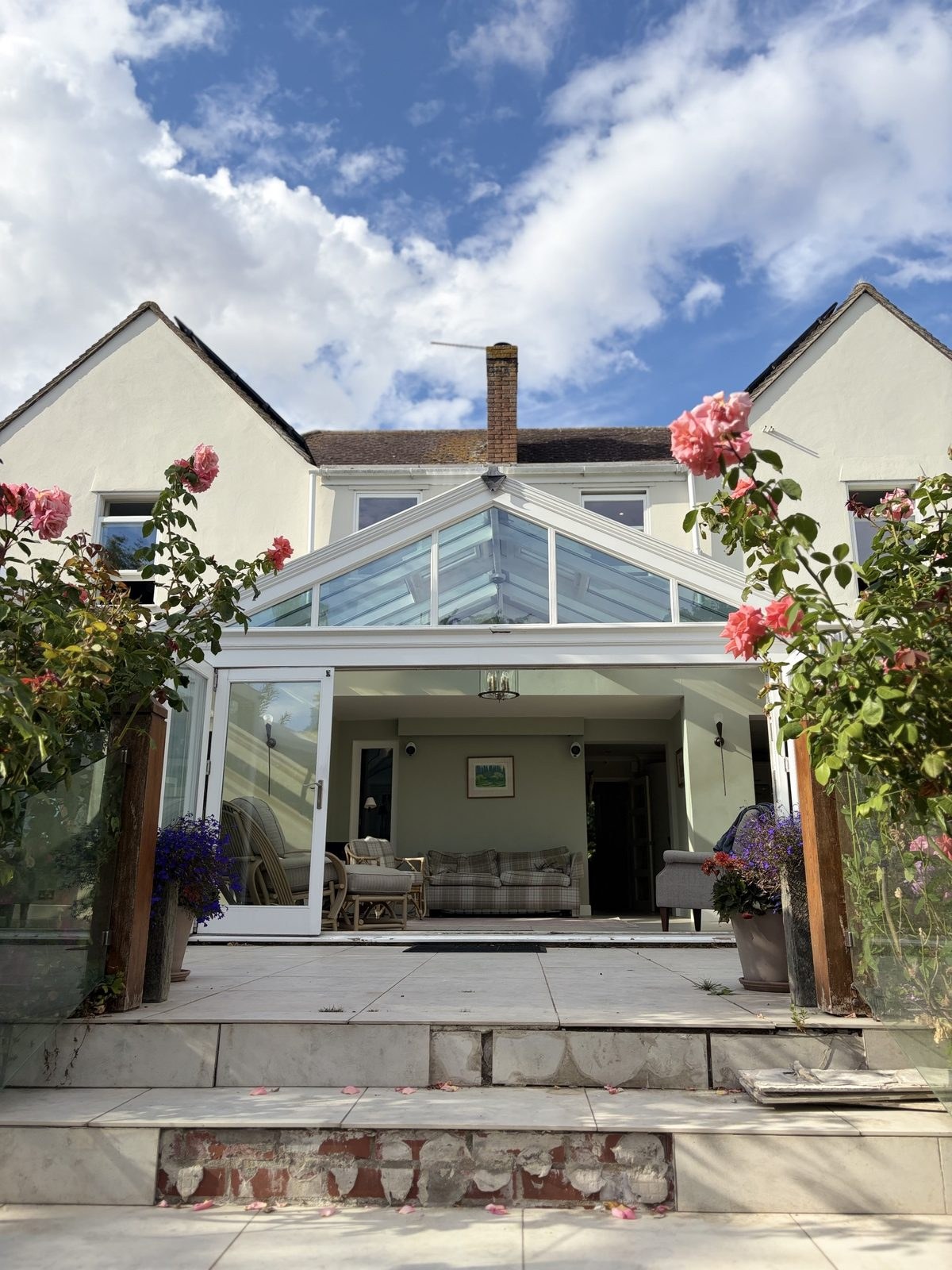
Conservatories, orangeries and glazed extensions
Open plan offices and glass-fronted commercial buildings
Server rooms and IT areas with temperature-sensitive equipment
Velfi installs a range of solar window films from 3M, covering neutral, reflective and low-reflectance options to suit different glass types and aesthetics. The right film depends on your glass specification, orientation and how much heat reduction is needed. Samples can be sent before anything is confirmed.
Neutral films
Reduce heat and UV with minimal change to the glass appearance. A good fit for homes and conservation areas where reflective coatings are not appropriate.
Reflective films
The highest solar rejection. A mirror-like appearance from outside in daylight suits commercial buildings and south-facing glazed facades. The mirror effect fades at night when the room is lit.
Low-reflectance films
Good solar performance without the mirrored look. Popular for offices and domestic settings where clarity matters as much as heat control.
Typical installation times
Most solar film jobs are done in a single day.
Fitting from inside usually needs no scaffolding and no structural work. The room is back in use the same day. Below are typical timeframes — exact times depend on the number of panes and access.
Single room or small number of panes
Half a day. The most common residential job — one or two south-facing windows in a bedroom or living room.
Residential conservatory or extension
One day. Roof glass and side panels covered in a single visit. No disruption to the rest of the house.
Office floor or open plan workspace
One to two days. Can be scheduled out of hours or over a weekend to avoid any disruption to the working week.
Yes, and for the right building it makes a big difference. Solar window film cuts the heat that comes through glass, reduces glare on screens, and blocks UV that fades furniture and floors. Manufacturers publish a figure called total solar energy rejected, which for quality films is commonly around 50% to 60% or more, along with UV protection above 99%. The exact figures depend on the film and the glass.
But it is not air conditioning, and you should buy it for the right reasons. It reduces heat gain through glazing. It does not cool a room that is hot for other reasons. It works best on south and west facing glass, conservatories, glazed roofs and offices with big windows.
Fitted inside or outside, whichever suits your glass and access
Chosen to suit your glass, with the film named in your quote
An honest answer on whether it is worth doing, from a photo and the room's orientation
Where it works hardest
Conservatories, offices and glazed roofs.
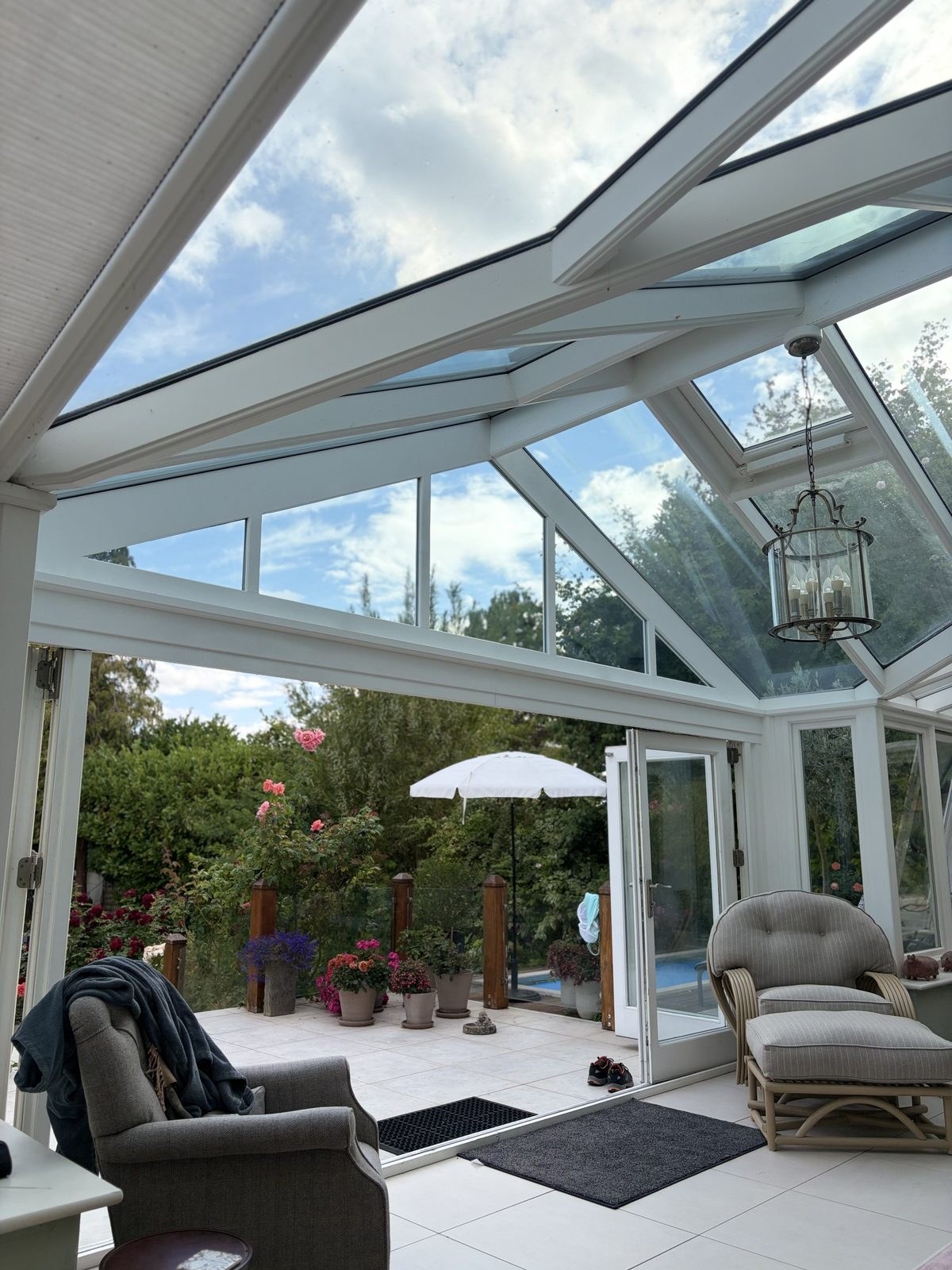
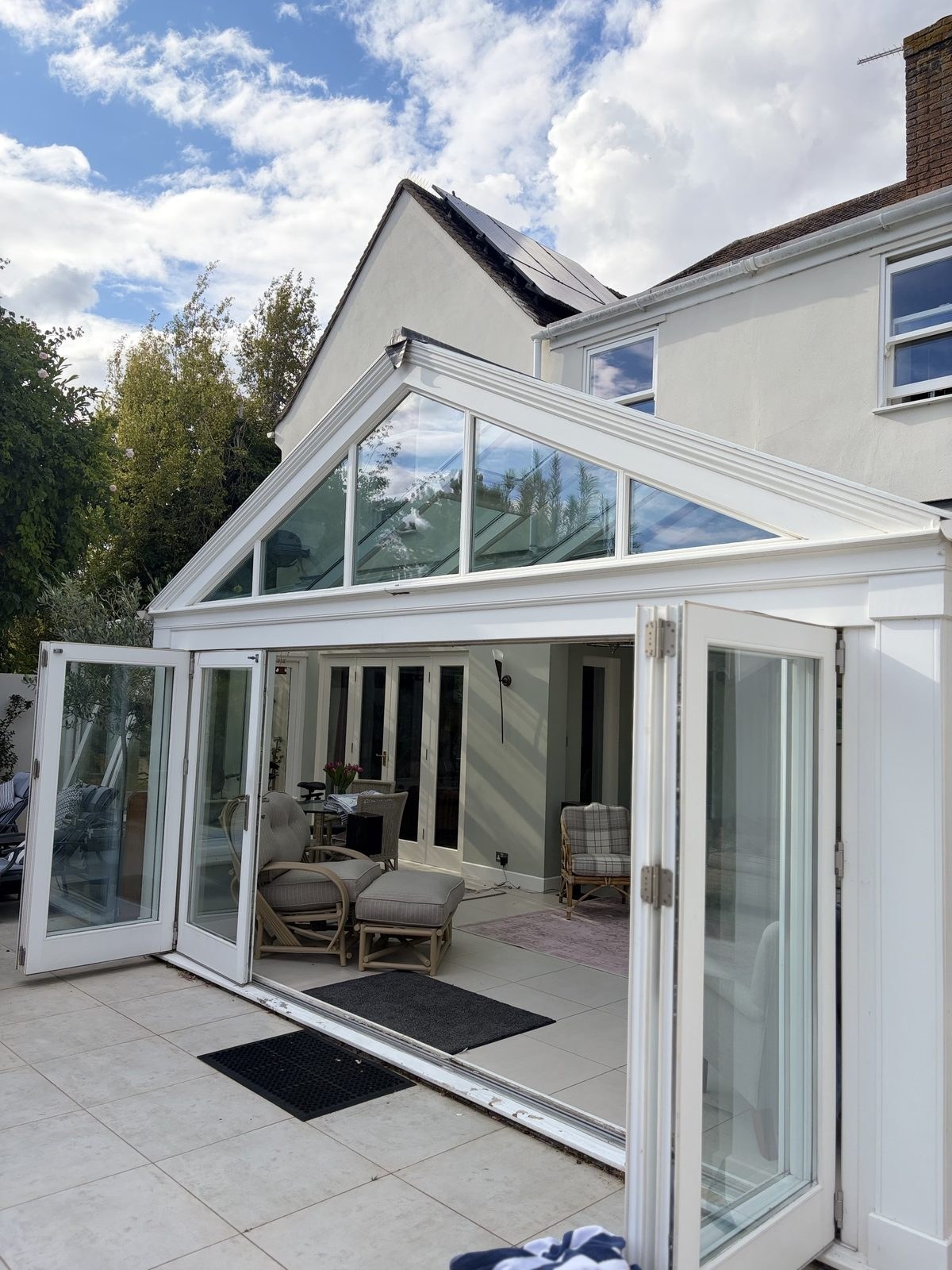
Conservatories
The classic problem, a room that cooks in summer. Roof glazing needs a film suited to it and a safe access plan.
South and west facing rooms
Afternoon sun is the culprit. Film takes the edge off without blocking the view.
Home offices
Cuts glare on screens so you stop closing the blinds at noon.
Offices with big windows
Fewer hot desks, less strain on air conditioning, glare gone from monitors. See office refurbishment.
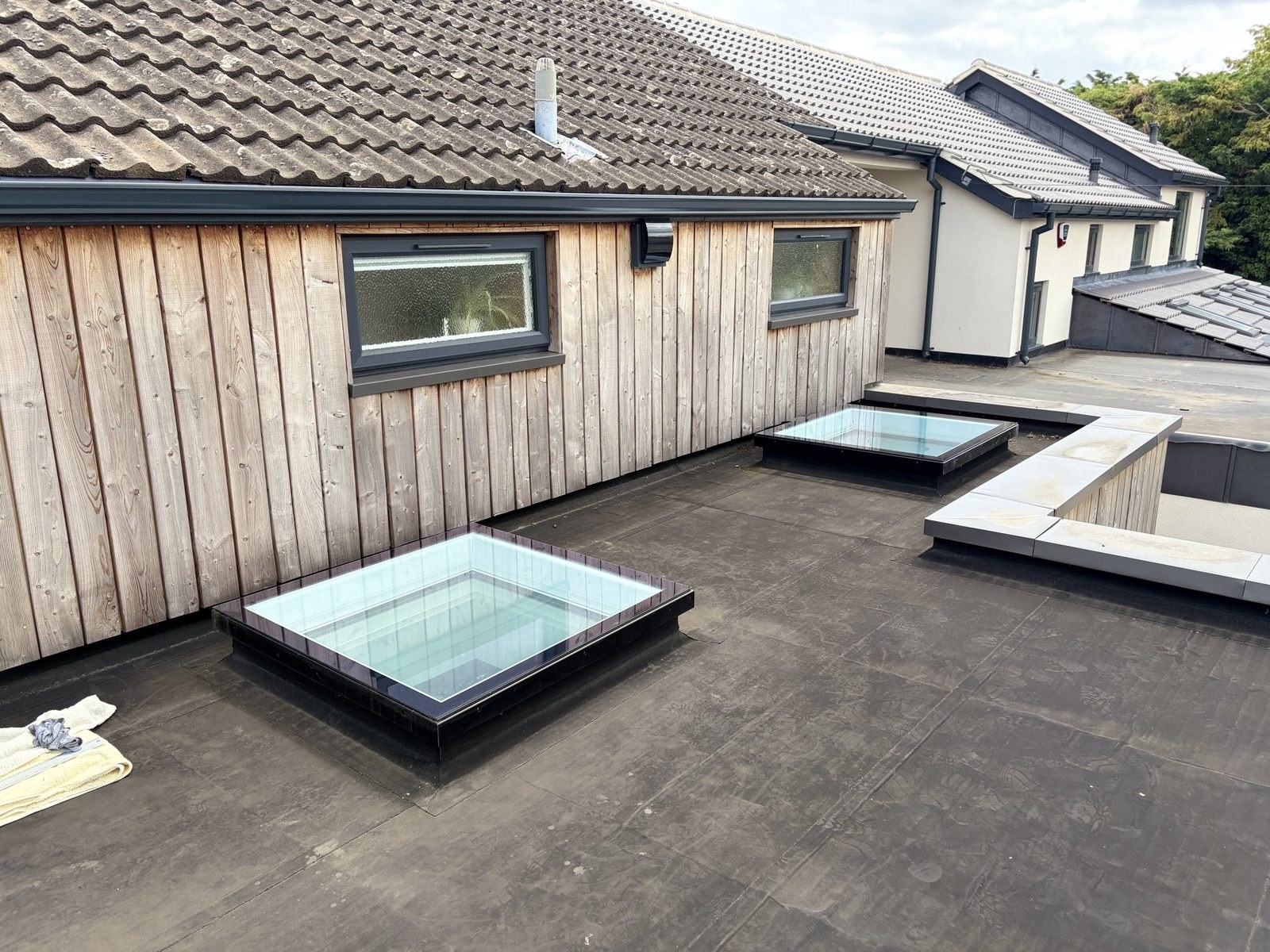
Skylights and rooflights
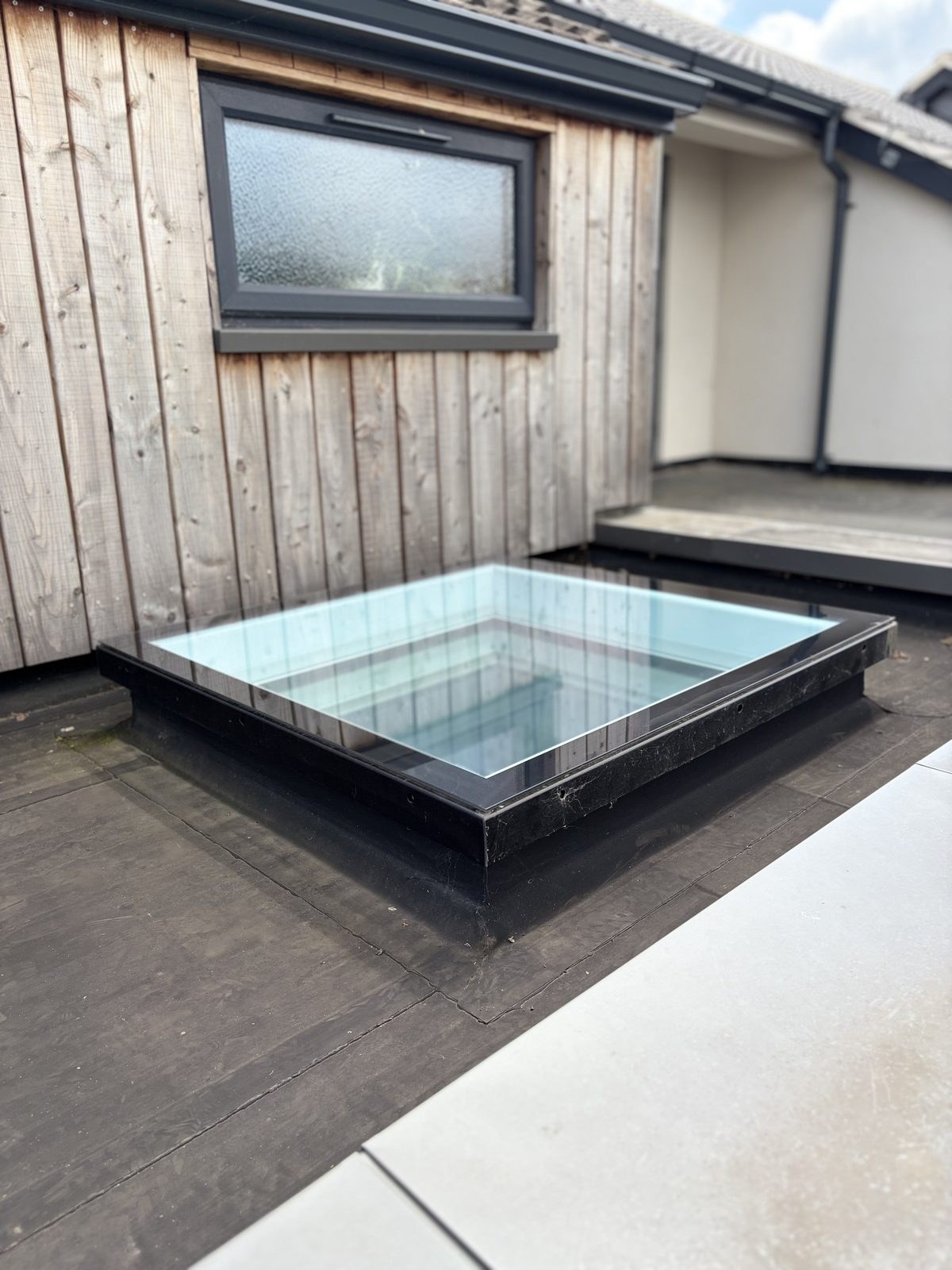
Heat gain from above is the hardest to stop with blinds, and film works well here.
Shops and showrooms
Protects stock and fittings from UV fading while keeping displays visible.
Pros and cons
What you gain, and what to weigh up.
The good
Worth knowing
Heat
Cuts summer solar gain through the glass
Does not replace ventilation or shading
Light
Reduces glare, stays bright
Rooms can look slightly darker, depending on the film
UV
Blocks over 99% on suitable films
Protects but does not stop all fading
Looks
Clear and neutral options exist
Reflective films change how glass looks from outside
Winter
Low-e and some other films give a modest insulation benefit
Mainly a summer product. Do not buy it to cut heating bills.
Glazing
Suits most standard glass with the right film
Double and triple glazing need the film checked against the glass before fitting.
Solar film is worth it if a room overheats in summer, glare makes screens hard to read, or furniture is fading. If your home is already cool and shaded, there is little to gain. The way to find out is to send a photo and the orientation of the room.
Most domestic and office films are fitted to the inside face of the glass. Exterior-grade films from manufacturers such as 3M and LLumar are made for outside fitting and are often used on double and triple glazing, skylights and glass that is hard to reach from inside. Which side is right depends on the film, the glass and the access, and we confirm it in your quote.
Before you book
What to know about solar film.
Double glazing. Glass heats up under film, and some units can crack from thermal stress. Manufacturers publish glass compatibility guidance, and some do not cover breakage on certain glass types. We check yours before recommending anything.
A bit darker. Clear and neutral films change the room very little. Darker or reflective films reduce light more. Samples help you judge.
Mainly summer. Low-e and some other films add a modest insulation benefit, but do not buy solar film to cut heating bills.
Conservatory roofs. Roof glazing needs a film chosen for roof glass, and sometimes an exterior-grade film, plus a safe access plan, confirmed before the quote.
Inside or outside. Interior films are the usual choice. Exterior-grade films suit glass that cannot be treated from inside, and the right side is decided case by case.
In writing. The film named, the glass checked and the manufacturer warranty confirmed in your quote.
Common questions
What people ask before they get in touch.
Still not sure which film is right? Send a photo of the glass and tell us what is bothering you. You will get a recommendation and a fixed quote within 24 hours.
No. Solar window film selectively blocks infrared and UV wavelengths rather than blocking visible light. The room remains bright. How much visible light gets through depends on the film. Clear and neutral films can let through 70% or more, while darker and reflective films are around 20% to 40%. The figure is confirmed before installation so you know what to expect.
Often, but not every film suits every unit. Film absorbs some heat, which can stress the glass, especially in sealed double and triple glazed units or glass with low-e coatings. Manufacturers publish glass compatibility guidance and some do not cover glass breakage on certain glass types, so the glass is checked before quoting. Exterior-grade films are often chosen for double and triple glazing for this reason.
Quality solar films from manufacturers such as 3M and LLumar are made to last many years with professional fitting. Warranty length depends on the brand, the film, the glass and whether it is fitted inside or outside, and is commonly in the region of 5 to 10 years or longer. Glass breakage cover is separate and varies. The exact terms are confirmed in writing in your quote.
It depends on the film type. Neutral films are barely visible from the outside. Reflective films give the glass a mirrored look in daylight, which is more noticeable. The effect reverses at night when the room is lit. The right film is chosen based on your aesthetic requirements and any planning or landlord restrictions, which are discussed before anything is confirmed.
Film prices vary so much that we do not give a figure before we understand the job. We suit the film type to your goals, specify the right product and fit it to your budget, then you get a fixed quote within 24 hours of seeing photos.
Yes. Quality solar window films commonly reject around 50% to 60% or more of the solar energy hitting the glass and block over 99% of UV, with the exact figures depending on the film and the glass. It works best on south and west facing glass, conservatories, glazed roofs and offices with large windows.
If a room overheats in summer, glare makes screens hard to read, or furniture fades, yes. If your home is already cool and shaded, there is little to gain. Send a photo and the orientation of the room for an honest answer.
Both are possible. Most domestic and office solar film is fitted to the inside face, and some brands such as Opalux are interior films only. Exterior-grade films, such as 3M Prestige Exterior and LLumar exterior films, are made to be fitted outside and are often used on double and triple glazing, skylights and glass that is hard to reach from inside. The right side depends on the film, the glass and the access, and we confirm it before quoting.
In most cases, yes, but not every film suits every double-glazed unit. Film adds heat to the glass, which can cause thermal stress in some units, and manufacturers set out which glass types their film and warranty cover. We check your glass against the film before any recommendation.
Slightly, depending on the film. Clear and neutral films change the room very little. Darker or reflective films reduce light more, with the lightest passing around 20% of visible light. Samples help you judge before you commit.
Low-e and some other films give a modest insulation benefit, but solar window film is mainly a summer product. Do not buy it to cut heating bills.
Yes, on suitable roof glazing. It needs a film chosen for roof glass, sometimes an exterior-grade film because roof glass is hard to reach from inside, and a safe access plan. Both are confirmed before the quote.
Areas covered
Cambridge and all of Cambridgeshire.
Based in Wilburton. No travel surcharge for most Cambridgeshire locations. Residential and commercial.