Commercial architectural film wrapping. Refurbish without the refit.
A full commercial strip-out and refit is expensive, slow and disruptive, and often unnecessary. Architectural film wrapping transforms lifts, reception desks, wall panels, doors and partitions using the surfaces you already have, with fire-rated materials, full documentation and minimal downtime. This is the complete guide for facilities managers, developers and business owners across Cambridge and nationwide.
Facilities managers and main contractors researching architectural film wrapping usually have the same starting question: is this a credible alternative to a full refurbishment, or a cosmetic shortcut? This guide covers what commercial wrapping actually is, where it's used, what sectors rely on it, how long projects take, and the documentation and compliance process behind every job, so you can assess it against a traditional refit with real information.
Architectural film is a professional-grade surface material that bonds to existing substrates and completely changes their appearance and finish. In a commercial setting it is applied to lifts, reception desks, wall panels, doors, partitions, columns, furniture and feature walls. The structure underneath stays exactly where it is; only the visible surface changes. It is the same core technology as residential kitchen wrapping, delivered at commercial scale with the fire ratings, documentation and scheduling that commercial environments demand. The full commercial service sits under office refurbishment and the architectural film hub.
Why commercial clients choose wrapping over refurbishment
Three reasons come up again and again: cost, downtime and sustainability. Wrapping avoids the strip-out and refit because you keep the existing substrates. Downtime is minimal because work is done out of hours or in phases, so the building keeps operating. And keeping materials in use rather than sending them to landfill supports the sustainability and embodied-carbon targets that increasingly feature in procurement. For facilities managers, the reduced disruption is often the single biggest advantage.
0
Nothing stripped out, because the existing substrates stay in place and only the surface changes.
Lift and elevator interior wrapping
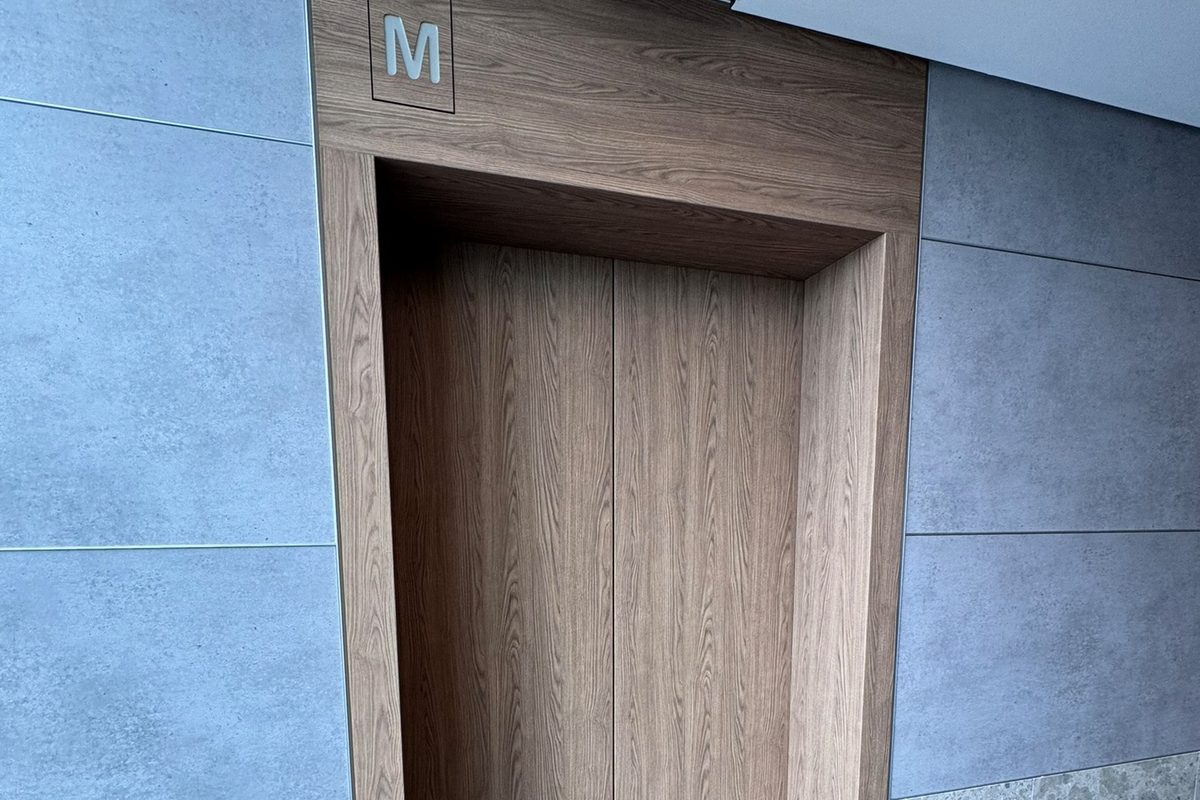
Lift interiors take heavy daily wear and date quickly, but replacing lift car panels is expensive and takes the lift out of service for an extended period. Wrapping the panels in brushed metal, stone, timber or solid-colour architectural film transforms the interior, and is typically completed over a weekend or out of hours so the lift is back in service with minimal disruption. Fire-rated film and full documentation are provided as standard. See the dedicated lift wrapping page.
A lift car interior wrapped in architectural film — back in service the same weekend.
Reception desks and first impressions
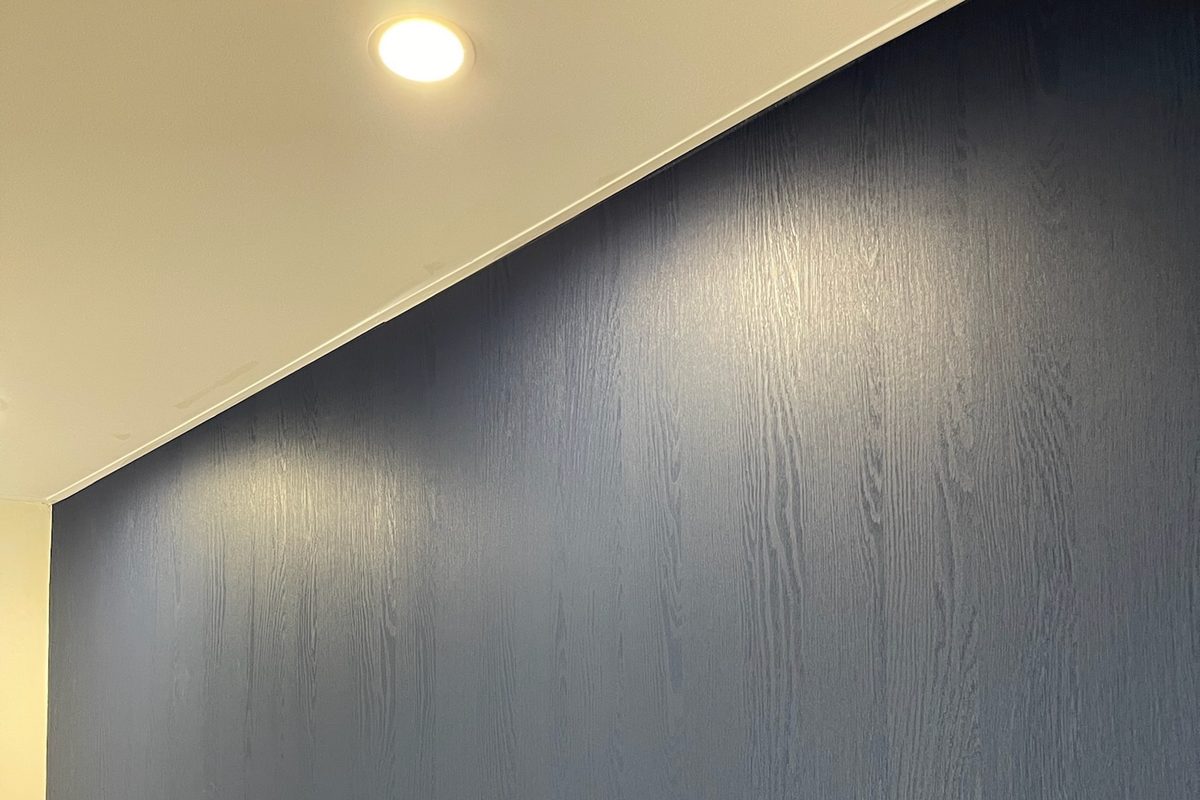
A reception desk is the first thing a client, candidate or visitor sees, and a tired one undermines an otherwise professional space. Wrapping a reception desk in stone, marble, timber or a brand colour gives it a complete refresh in a day, with no downtime to the reception area. The same applies to counters in retail and hospitality settings.
A reception wall refreshed in architectural film — no rebuild, no downtime to front-of-house.
Wall panels, doors and partitions
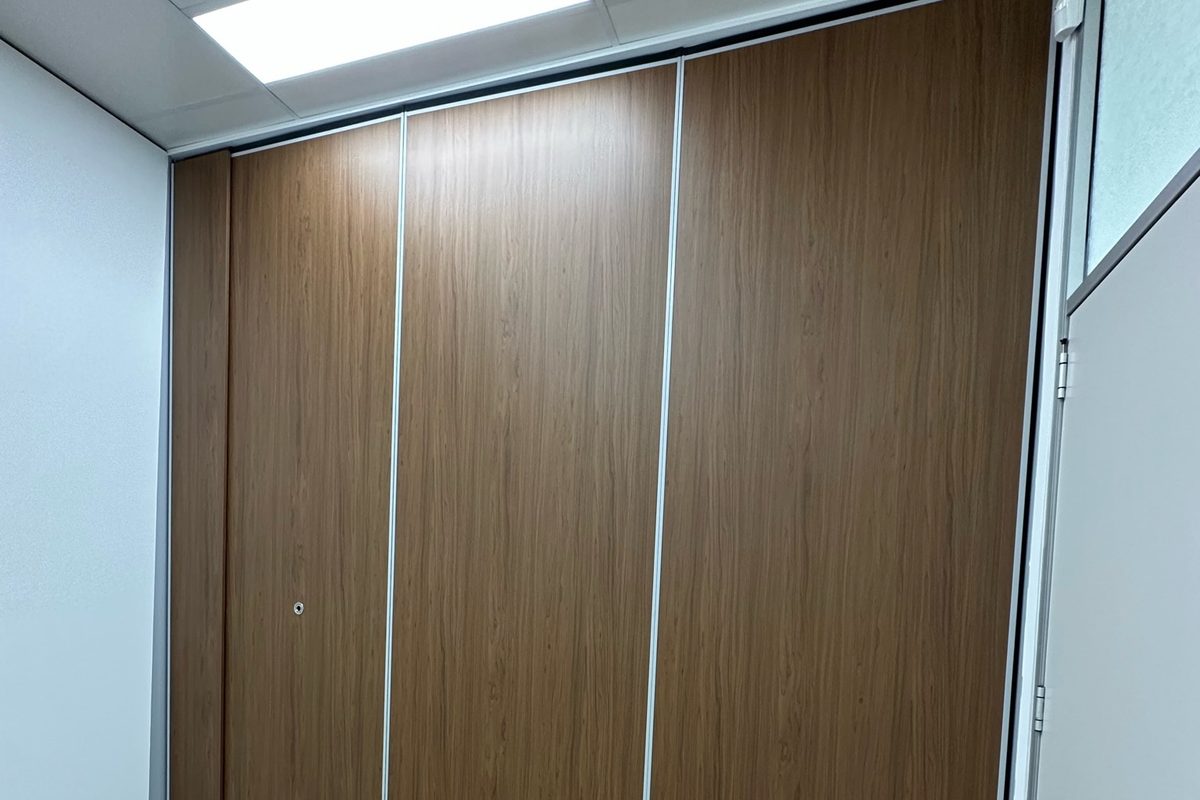
Large expanses of dated wall panelling, doors and glazed partitions are where commercial wrapping delivers the most visible transformation for the spend. Fire-rated film brings walls and doors up to a modern finish, while window film on partitions adds privacy, branding or manifestation to comply with safety glazing expectations. Together they can transform a whole floor without a single wall coming down.
Glazed office partitions finished with film, part of a wider floor refresh.
Furniture, columns and feature walls
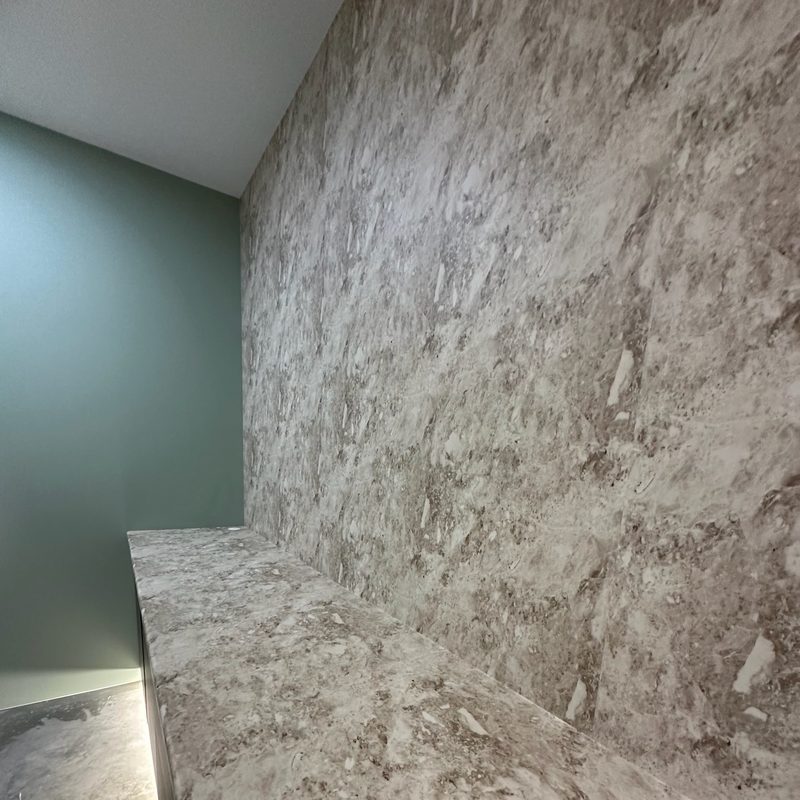
Beyond the obvious surfaces, architectural film wraps freestanding and fitted furniture, structural columns and feature walls. This is how a whole commercial interior can be re-themed or rebranded, matching a refreshed colour scheme across every surface, without the cost and disruption of replacing any of it.
A feature wall rewrapped to match a refreshed commercial colour scheme.
A few examples of the kind of brief this typically solves. In an NHS clinical setting, reception and corridor wall panels need refreshing without ever closing a department, which means phasing the work room by room over successive evenings with infection-control-compliant film. In a university building, lift interiors and common-area panelling need to be brought up to a modern standard inside a fixed shutdown window, such as the summer break, with everything signed off before term restarts. In a hotel, guest bathroom vanity units and corridor doors need refreshing floor by floor without taking rooms out of inventory for more than a night at a time. Different sectors, the same underlying requirement: a real transformation, on a schedule the business can actually work around.
Typical project timelines
Timelines depend on scope, but most commercial projects fall into a few clear bands.
Project type
Typical timeline
Disruption
Single reception desk or counter
1 day
None — area usable same day
Lift car interior
1 weekend
Lift out of service overnight/weekend
Office floor (partitions, doors, walls)
3-5 days, out of hours
None during working hours
Multi-room phased programme (healthcare, hotel)
Ongoing, room by room
One room/area at a time
Multi-site rollout
Scheduled per site
Managed to each site's operating hours
Every programme is agreed and confirmed in writing before work starts, including which areas are affected on which dates, so facilities teams can plan around it with certainty rather than an open-ended "a few weeks" estimate.
Fire ratings, documentation and compliance
This is where professional commercial wrapping separates itself from a general contractor or a DIY approach. Velfi provides full RAMS and health and safety documentation as standard, the same paperwork demanded on NHS, university and corporate sites, and uses fire-rated films appropriate to the application. Nearly a decade of commercial installation experience sits behind every project, including programmes for NHS Cambridgeshire, ARM Cambridge HQ, the University of Cambridge, luxury hotels and Fred Olsen Cruise Lines. That documentation and track record is exactly what facilities managers and main contractors need to sign off a supplier.
In practice, the documentation process runs alongside the quote, not after it. A site survey confirms the substrates and fire rating requirements for the specific building type. Product data sheets and fire certificates for the film specified are provided before work is booked in, not chased for afterwards. A method statement and risk assessment covering the specific site and access arrangements is issued ahead of the installation date. And on completion, a written 10-year warranty confirms the standard the work is held to. For a facilities manager or main contractor, that means every document needed for a compliance file exists before the installer sets foot on site.
Commercial wrapping across Cambridge and nationwide
Velfi is based near Cambridge and covers the city and Cambridgeshire for all work, but commercial architectural film projects are delivered nationwide, with the same standard, materials and documentation on every site. For multi-site rollouts where consistency matters, that single accountable standard is a genuine advantage.
Common questions
Questions people actually ask.
Commercial architectural film wrapping is the application of professional-grade film to interior surfaces in commercial buildings, lifts, reception desks, wall panels, doors, partitions and furniture, to transform their appearance without ripping them out and replacing them. It is the same technology used in kitchen wrapping, applied at commercial scale with fire-rated materials and full documentation.
Yes. Lift interior wrapping is typically done over a weekend or out of hours, so the lift is back in service with minimal disruption. This is a major advantage over replacing lift panels, which can take a lift out of action for far longer and costs many times more.
The films used for commercial work meet the relevant fire ratings for interior applications, and full documentation including RAMS is provided as standard. This is essential for NHS, education, hospitality and corporate environments, and is something a general handyman or DIY approach cannot offer.
Film prices vary so much that we do not give a figure before we understand the job. We suit the film type to your goals, specify the right product and fit it to your budget, then you get a fixed quote. Wrapping keeps the existing substrates and changes only the surface, and there is far less downtime, which for a trading business or a working office is often the bigger saving.
Reception desks, lift interiors, wall panels, doors, meeting-room partitions, retail counters, furniture, columns and feature walls. Combined with window film, an entire commercial interior can be refreshed without a conventional refurbishment.
Yes. While Velfi is Cambridge-based, commercial architectural film projects are delivered nationwide, with the same standard and documentation on every site regardless of location.
Minimal. Work is scheduled out of hours, overnight or in phases so the business keeps running. There is no demolition, no dust and no lengthy shutdown, which is the main reason facilities managers choose wrapping over refurbishment.
Send photos of the space and a brief outline. A fixed quote with full documentation comes back within 24 hours. Commercial projects delivered nationwide.