Architectural film for interior designers. The specification guide.
Architectural film is increasingly specified by interior designers for commercial and residential refurbishment. This guide covers the practical specification questions — sustainability credentials, fire ratings, durability, finish selection, and how to brief an installer — written from the installation side rather than the manufacturer side.
Architectural film has moved well beyond the DIY worktop wrap it started as. Specified correctly, it is now a legitimate route to transforming doors, joinery, worktops, wall panels and furniture across commercial and residential projects, without the cost, waste or programme risk of a full replacement. But specifying it properly means knowing more than what it looks like in a sample book. This guide covers the questions that actually decide whether a specification holds up on site: sustainability credentials, fire classifications, substrate suitability, and how to brief an installer so the quote you get back is one you can actually rely on.
Architectural film is not a compromise material. The same films used to wrap a domestic kitchen island are specified in NHS hospitals, university buildings and luxury hotels, precisely because they hold up under scrutiny and heavy use, not despite it. For a designer, that means real control over surface finishes across doors, joinery, worktops, wall panels and furniture, without the cost or disruption of stripping those elements out and replacing them.
It also changes what is possible within a fixed budget and programme. A full refit of joinery, doors and counters can consume most of a project's budget before a single decorative decision gets made. Wrapping the existing substrates in a specified finish frees up that budget for the choices that actually differentiate the space, while delivering a faster programme, a lower spend and less material sent to landfill — all things clients and procurement teams now weigh as heavily as the finish itself. See the full range of applications on the architectural film hub.
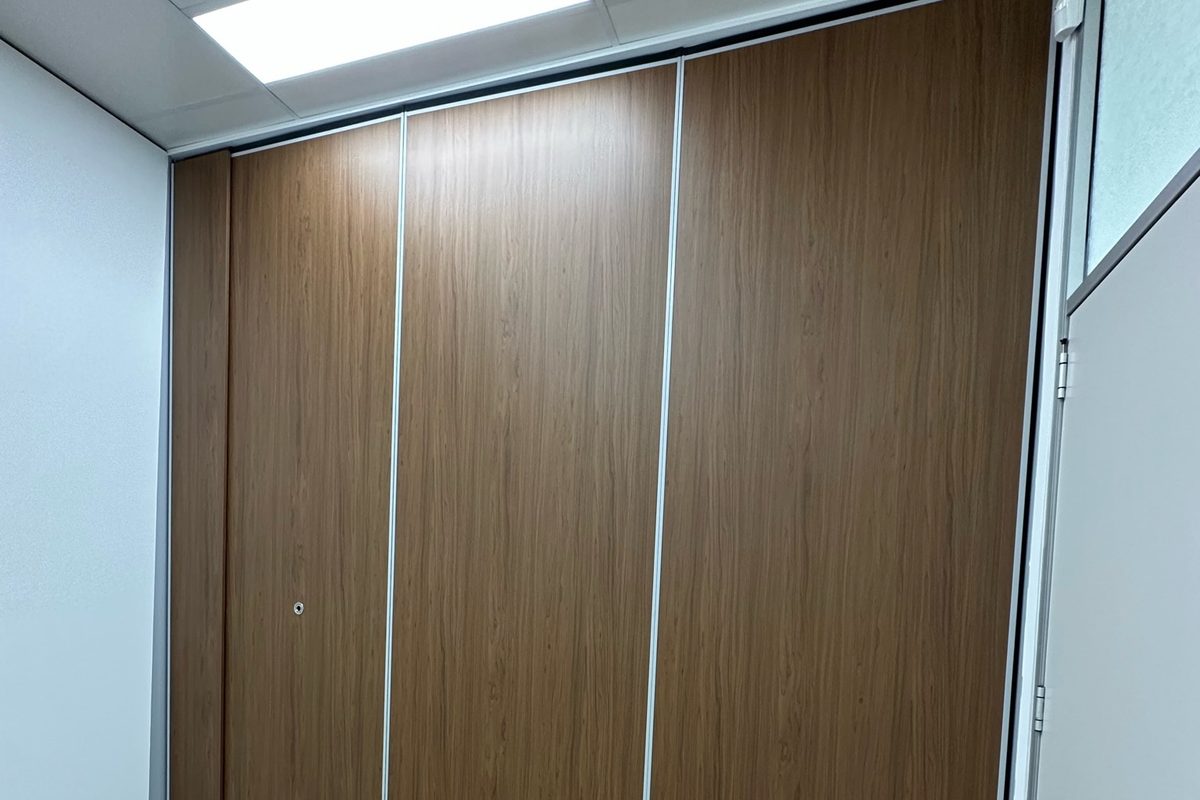
Specified finishes applied across partitions and surrounding joinery in a working office.
The sustainability case for specifying film
This is the part of the specification that manufacturer brochures and general finish guides tend to skate over, and it is increasingly the part clients and procurement teams ask about first.
Embodied carbon: wrapping keeps existing substrates in use. The carbon already spent manufacturing a door, worktop or run of joinery is retained rather than paid for again on a replacement, and no new substrate needs to be manufactured, shipped and installed in its place.
Waste reduction: there is no strip-out, no skip and no demolition waste. The unit stays in the building; only its surface changes.
Film lifespan: this is not a short-life finish. Manufacturer warranties of 10 to 12 years are standard on the films Velfi specifies, which puts wrapping in the same conversation as a conventional refit on longevity, not a stopgap ahead of one.
Circular potential: when tastes or branding change, the same surface can be re-wrapped rather than replaced again, extending the life of the underlying substrate through multiple refurbishment cycles.
Documentation: waste reduction and material-retention data can be provided on request, which is the kind of evidence sustainability teams and procurement boards actually want to see, not a general sustainability statement.
In Cambridge specifically, this matters more than it used to. University colleges, NHS trusts and the city's tech companies increasingly score suppliers on sustainability criteria as part of procurement, and a specification that can point to retained substrates and documented waste reduction has a real advantage. The full case is covered in the sustainable interior refurbishment guide, and in more technical depth in the sustainable refurbishment evidence guide.
10-12yr
Manufacturer warranty on the architectural films Velfi specifies — a long-life refurbishment, not a short-term finish.
Fire ratings and compliance
Fire-rated films exist for doors, wall panels and lift interiors, and this is where specification detail matters most. Used correctly, the film does not alter the fire rating of a fire door — it sits as a surface layer on a door leaf that is not structurally altered, and the classification of the underlying door is preserved. Documentation confirming the film's classification is provided as standard on every fire-rated specification, not chased for after the fact.
This is essential wherever compliance is scrutinised: healthcare, education, hospitality and any multi-tenanted commercial building. A specification that cannot produce this documentation on request is not one a facilities manager or building control officer can sign off. See the dedicated guide to door and fire door wrapping and the technical detail in the specification guide to fire ratings and compliance.
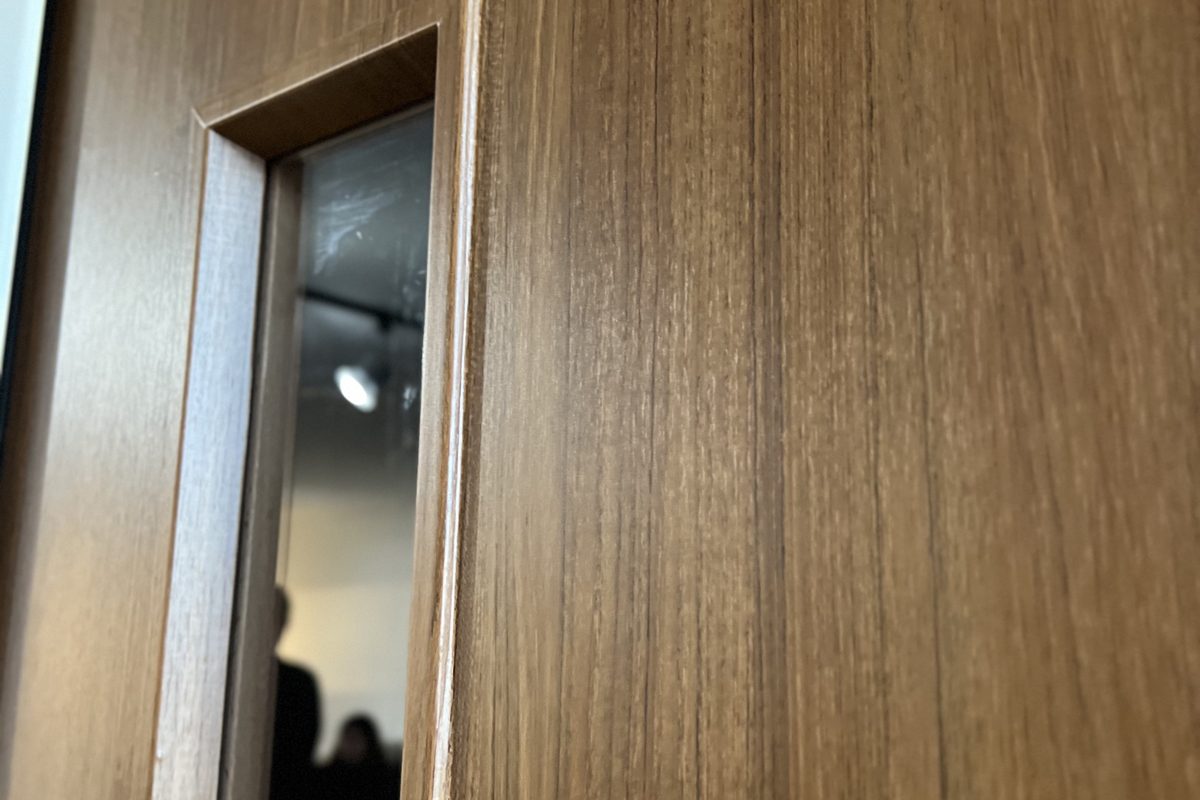
A fire door finished in fire-rated film — classification documentation provided as standard.
How to choose the right finish
Start with the mood and lighting of the space, not the sample book. A finish that looks right under a showroom light can read completely differently under a room's actual mix of daylight and artificial lighting, which is why assessing physical samples on site, not from a mood board or a digital swatch alone, should always come before a finish is locked into a specification.
Broadly, finishes fall into a few families: wood grains, with oak, walnut and black ash all currently trending; solid matt colours such as navy, sage, clay and anthracite; stone and concrete effects; metallic accents in bronze and brass; and textured or specialist finishes for feature applications. The current direction across most projects is toward warmer tones replacing cooler greys, matt finishes over gloss, and film that reads as a natural material rather than an obviously synthetic one.
Wood grains — oak, walnut, black ash
Solid matt colours — navy, sage, clay, anthracite
Stone and concrete effects
Metallic accents — bronze, brass
Textured and specialist finishes
Velfi's digital swatch books cover every finish available across the major manufacturers, and the films and finishes hub breaks each one down by brand. Always follow up a digital shortlist with physical samples assessed under the actual site lighting before finalising a specification.
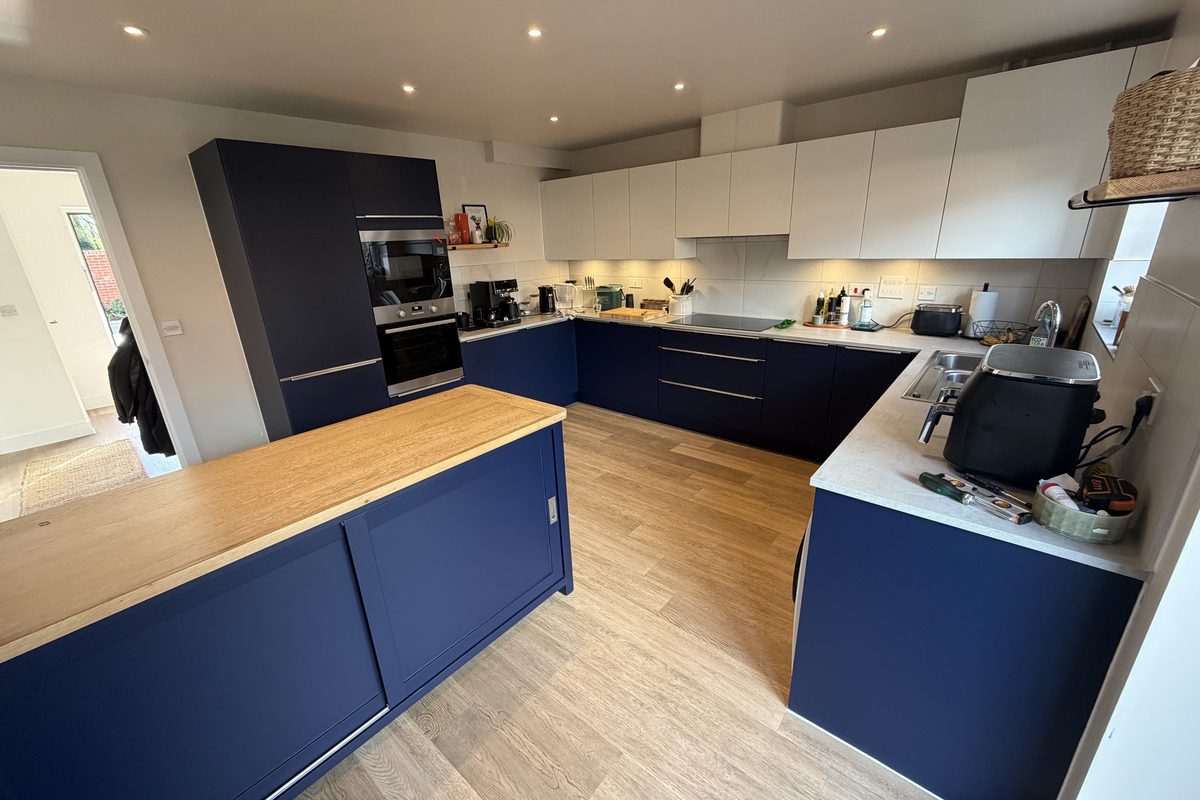
A solid matt navy finish — one of the most requested colourways on current specifications.
Durability and suitability by application
Not every film suits every surface, and this is where a general finish guide falls short of an actual specification. Worktops need a worktop-rated film built to resist heat, knocks and daily cleaning. Wet environments need a film that is genuinely waterproof, not just water-resistant. High-traffic doors need an impact-resistant film that will not lift or chip at the edges within the first year.
A good installer will flag it if a specified film is wrong for its intended application and recommend an alternative before work is booked in, not after a problem shows up on site. This is exactly where installer experience — rather than a manufacturer's generic marketing claims — should carry weight in a specification decision.
Application
What to specify
Doors
Impact-resistant film, wrapped edges rather than trimmed flush
Worktops
Worktop-rated film with heat and scratch resistance, precision splice joints
Wet areas
Fully waterproof, chemical-resistant film — not all films qualify
High-traffic surfaces
Heavy-duty grade with proven wear rating, not a decorative-grade film
Feature walls
Widest choice of finish; durability requirement is lower than functional surfaces
Furniture
Match grade to use — a reception desk sees far more contact than a side table
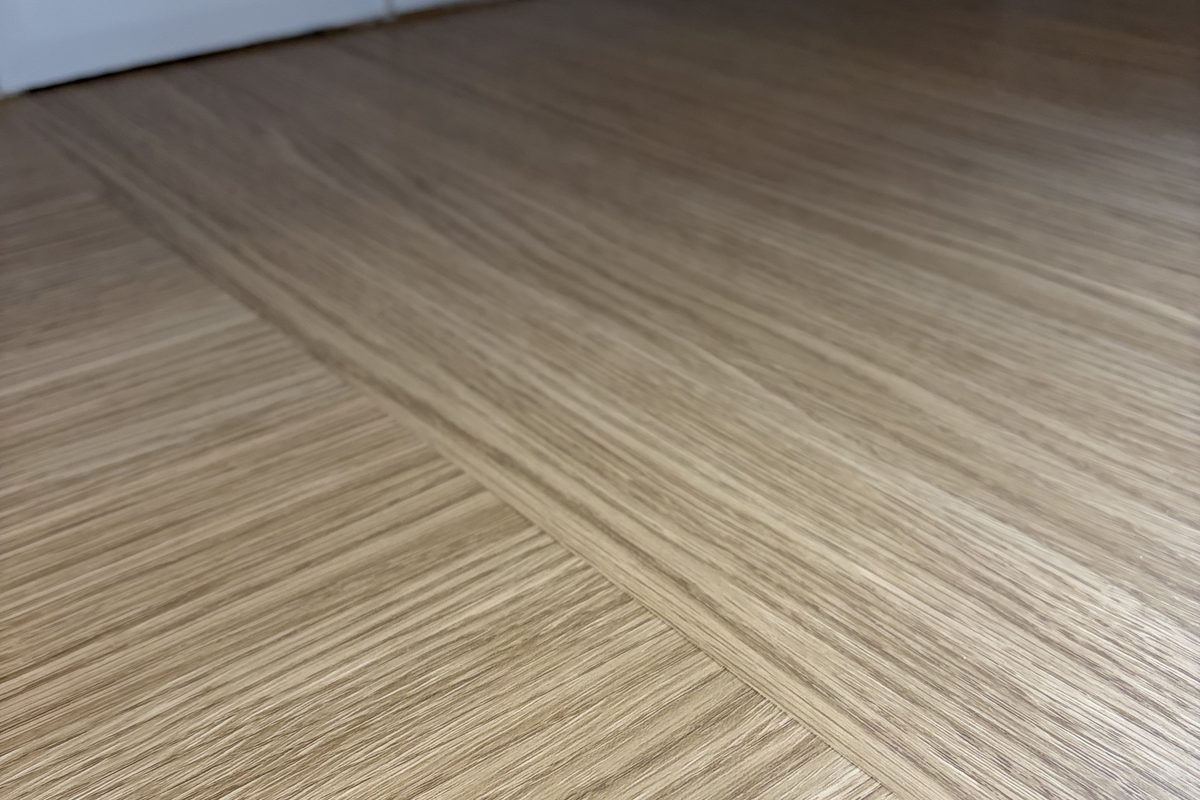
A precision-cut splice joint — the detail that separates a durable specification from a short-lived one.
How to brief an installer
A clear brief gets a quote back faster and gets a specification right the first time. At minimum, an installer needs: drawings or photos of the spaces involved, a surface schedule listing what is being wrapped, finish preferences or a shortlist, target programme dates, and any access constraints such as out-of-hours working or occupied areas.
In return, expect a fixed quote, a named material specification (not just "vinyl wrap"), fire rating documentation wherever a fire-rated film is being used, and RAMS for any commercial site. If any of that is missing, treat it as a red flag: no documentation, no fixed price, or no reference to fire ratings on a fire door specification are all signs the quote should not be relied on. Send a brief directly via the contact page for a fixed quote within 48 hours.
Residential vs commercial specification
Commercial specification adds a layer that residential work doesn't need: compliance documentation, out-of-hours scheduling around a working building, RAMS for every site visit, and often a phased delivery plan across multiple rooms or floors. See office refurbishment for how that plays out on a live commercial programme.
Residential specification is simpler in process, but the expectation on finish quality is exactly as high. In practice, running both types of project side by side raises the bar on both: the documentation discipline built for commercial compliance carries over into residential work, and the finish standard expected on a kitchen wrapping project is the same standard applied to a hotel corridor.
Common questions
Questions people actually ask.
Most rigid surfaces yes. Film bonds to laminate, MDF, metal, painted surfaces and melamine. It cannot be applied to fabric, heavily textured plaster or raw untreated timber without preparation.
Yes. It extends the life of existing substrates, eliminates demolition waste and avoids manufacturing replacements. Lifespan is 10-12 years with manufacturer warranty. Documentation for ESG reporting is available on request.
No, provided fire-rated film is used and the door leaf is not structurally altered. Documentation confirming the film's fire classification is provided.
Modern films from 3M DI-NOC, LX Hausys and Cover Styl replicate wood grain, stone, marble and metal with visible and tactile texture. Under normal conditions they are indistinguishable from the real material.
Yes. Physical samples of any finish are posted free of charge. Assess them under your site's actual lighting conditions before committing.
From specification to completion, most projects take 2-4 weeks depending on scale and material availability. Installation itself is fast — typically 1-3 days for smaller scopes, phased across weeks for larger programmes.
Specifying architectural film? Talk to the installer first.
Send drawings, photos or a brief and get an honest assessment of what film can and cannot do for your project. Fixed quote and material specification within 48 hours.