Specifying architectural film. Fire ratings, durability and compliance.
This guide covers the technical side of specifying architectural film for commercial and residential projects. Fire classifications, substrate compatibility, wet-area suitability, durability and the documentation needed for compliance. Written for designers, specifiers and facilities managers who need to know the material works, not just how it looks.
A finish that looks right in a sample book is only half a specification. The other half is knowing whether the film is rated for the application, whether it meets the fire classification the building needs, and what documentation a specifier can actually rely on. This guide covers that technical half, from film families and fire ratings through to substrate compatibility, durability and the installation quality that determines whether a specification lasts a decade or fails within a year.
Not all architectural films are equal, and specification should match the film to the application, not just the look. The main product families used across Velfi's projects are 3M DI-NOC, with a 12-year warranty and the broadest range, best suited to high-spec commercial work; LX Hausys BENIF, also 12-year warranted with a strong wood and stone range; Cover Styl, a 10-year film offering good value for mid-range specifications; and Metamark MiA, a 5-year film suited to budget domestic applications.
The right choice depends on the application's exposure and the specification's expected life, not on which film happens to be cheapest per roll. The full range is browsable in the digital swatch books and the films and finishes hub.
Warranty length matters beyond the obvious. It also indicates how the manufacturer expects the film to be used and for how long, which shifts specification risk onto whoever chose the wrong grade for the application rather than onto the material itself. Specifying a 5-year budget film for a high-traffic commercial door is not a fire-ratings issue, but it is exactly the kind of mismatch that turns into a warranty dispute within the first year.
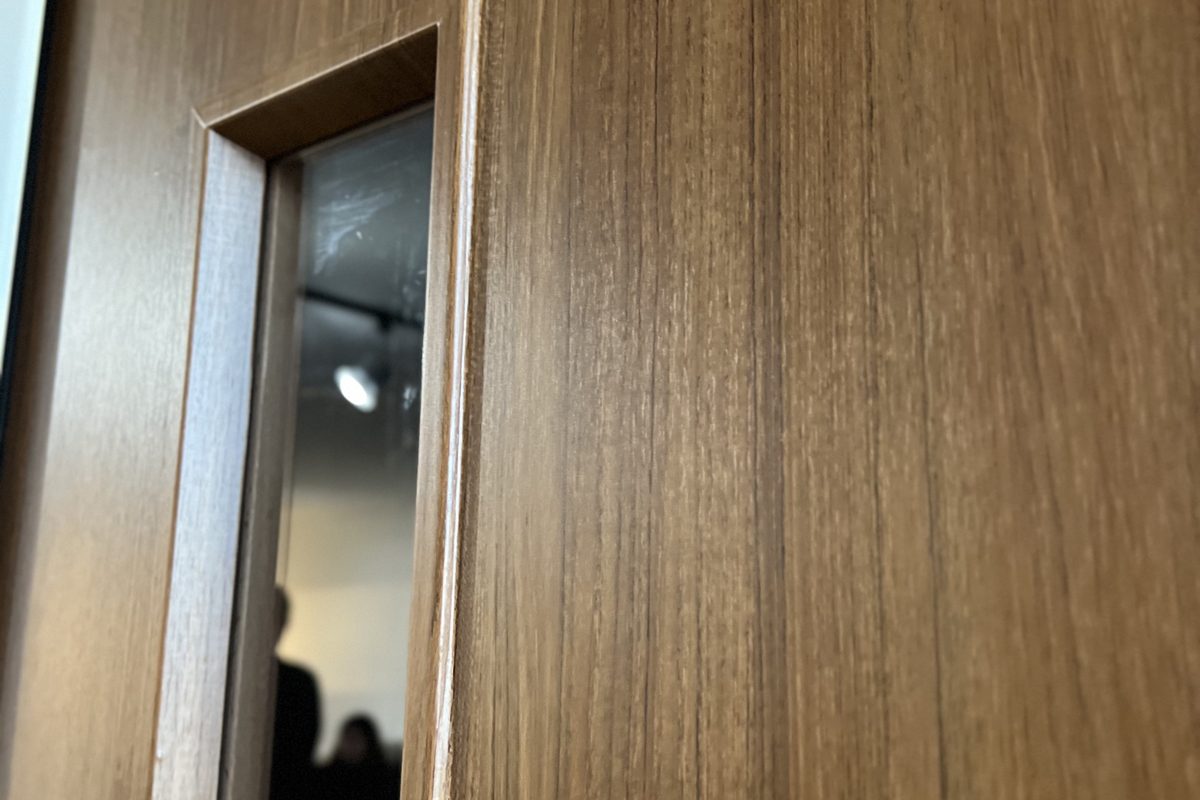
A wood grain finish from the higher-warranty film family, specified for daily use.
Fire ratings explained
Films can be classified to European fire standards under EN 13501-1, with Class B-s1,d0 and Class C-s1,d0 the classifications most commonly specified for interior applications. Fire-rated films are essential for fire doors, lift interiors, wall panels within means-of-escape corridors, and any surface located inside a fire-rated compartment.
It is important to be precise here: the film does not replace or extend the door's own fire certification. It is an additional surface layer that must not compromise the certification the door already holds, which is why the film's own classification and the method of application both matter. Velfi provides fire classification certificates for every fire-rated film specified, as standard, not on request. See door and fire door wrapping and lift wrapping for the applications this matters most on.
It helps to separate two different things that specifiers sometimes conflate. A film's reaction-to-fire classification under EN 13501-1 describes how the surface material itself behaves in a fire — how it burns, how much smoke it produces. A fire door's certification, tested to standards such as BS 476 or EN 1634, describes how the whole door assembly performs for a given period under fire conditions. Wrapping a certified fire door correctly means using a film with an appropriate reaction-to-fire classification, applied in a way that does not compromise the door's existing assembly certification. Confusing the two, or assuming one implies the other, is one of the more common specification errors on fire-rated projects.
Fire classification documentation is provided as standard for every fire-rated specification.
Substrate compatibility
Being clear about what cannot be wrapped is as important to a specification as knowing what can. This builds trust with specifiers who need a material to actually perform, not a sales pitch that avoids the limitations.
Substrate
Can it be wrapped?
Laminate
Yes
MDF
Yes, once primed
Metal
Yes, once cleaned and keyed
Melamine
Yes
Painted surfaces
Yes, if the paint is sound
Raw timber
Needs a primer or sealer first
Glass
Window film only, not architectural film
Fabric
No
Heavily textured plaster
No
Before committing a substrate to a specification, a simple adhesion test on an inconspicuous area is worth the ten minutes it takes. For timber specifically, checking moisture content before wrapping avoids a bond failing months later as trapped moisture works its way out from underneath the film.
Wet area and hygiene suitability
Films specified for bathrooms, washrooms, kitchens and healthcare settings must be genuinely waterproof and chemical-resistant, not merely water-resistant. A non-porous, correctly sealed surface also prevents bacterial harbourage — a real hygiene advantage over chipped or grouted laminate in a clinical or food-prep environment.
Not all films suit wet areas, and specifying the wrong grade for a bathroom or washroom is one of the more common and avoidable specification errors. Confirm water resistance explicitly rather than assuming any film will do. See commercial washroom refurbishment and bathroom wrapping for the applications this affects most.
Ventilation matters as much as the film specification in genuinely wet rooms. A waterproof film correctly sealed at every edge will still fail early if the substrate behind it stays permanently damp because the room is poorly ventilated. Wrapping is a surface solution, not a fix for an underlying moisture problem, and a professional installer should flag that distinction during a site survey rather than wrapping over it.
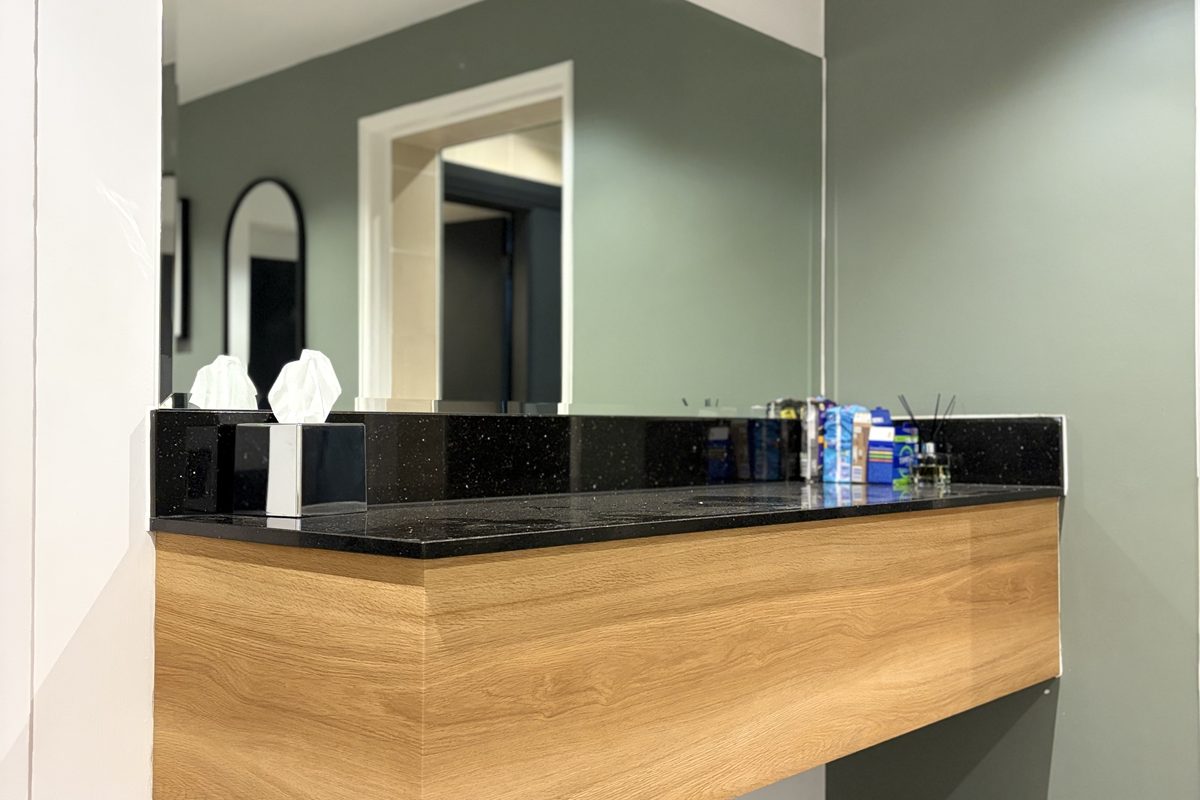
A waterproof film specification, confirmed suitable for a wet-area application.
Durability and wear ratings
Durability varies by film family and by application, and a specification should reflect that rather than treating every film as interchangeable. High-traffic doors need a different specification to a low-contact feature wall panel.
Application
Minimum recommended grade
Expected life
High-traffic doors
Heavy-duty, impact-resistant film
10-12 years
Worktops
Worktop-rated, heat and scratch resistant
10-12 years
Feature walls
Standard decorative grade
10-12 years
Furniture (light use)
Standard decorative grade
8-10 years
Budget domestic surfaces
Entry-level film
5 years
The honest note here too: no film is indestructible. Impact damage, deliberate vandalism and improper cleaning products can all cause premature failure regardless of the grade specified.
Cleaning regimes deserve specific mention in healthcare and hospitality specifications. Harsh chemical disinfectants used in clinical settings, or aggressive descalers used in commercial kitchens, can degrade the wrong film grade well before its rated lifespan. Confirming chemical compatibility with the cleaning products actually used on site, not just a generic durability rating, is part of a proper specification for these environments.
Edge finishing and installation quality
This is where installer quality shows, and where an otherwise correct material specification can still fail. Edges wrapped onto the rear of a door panel, rather than trimmed flush at the front edge, prevent the film lifting at the point of most contact. Splice joints on worktops must be precision-cut and properly sealed, or moisture will find its way underneath within months.
Surface preparation — cleaning, and priming where the substrate needs it — determines whether the bond lasts a decade or fails within months. The same film, installed poorly, will fail regardless of its manufacturer warranty. A specification should include installer standards, not just the material named.
Manufacturer-approved installer status is also worth checking, because some warranties are conditional on installation by an approved installer rather than the film itself. A specification that names the material but not the installer's standing with that manufacturer leaves a gap that only surfaces if a warranty claim is ever needed.
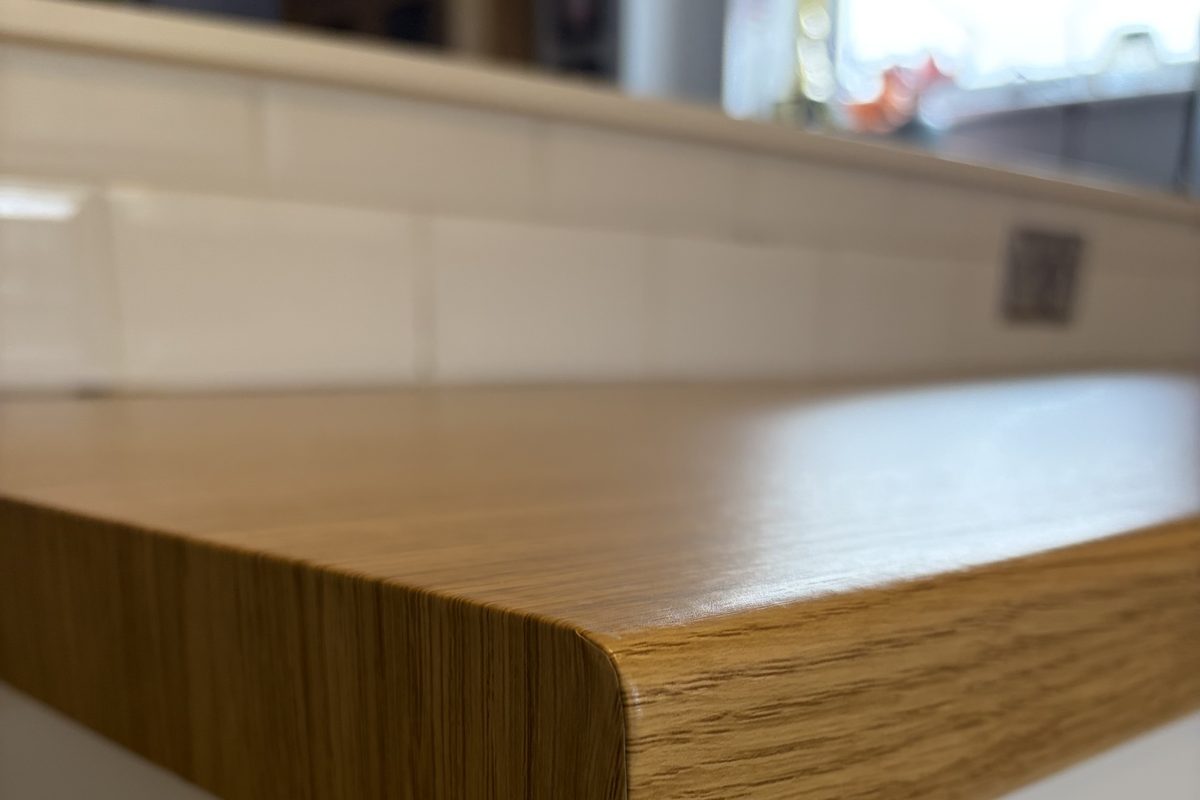
Edge finishing detail — the difference between a specification that lasts and one that doesn't.
What documentation to expect from a professional installer
A professional installer provides, without being chased: a fixed quote with the material specification named (not just "vinyl wrap"); fire classification certificates wherever fire-rated film is used; RAMS and health and safety documentation for commercial sites; and written confirmation of the warranty. Red flags include no documentation, a generic material description with no named product, and no reference to warranty terms in writing.
All of this should be reviewed before work starts, not after. A specification that only gets tested for completeness once the installer is on site is a specification that has already failed at the stage where it was cheapest to fix.
Common questions
Questions people actually ask.
It depends on the application and location. Fire doors and means-of-escape surfaces typically need Class B or Class C rated film. Velfi specifies the correct classification for each surface and provides documentation.
Most rigid surfaces, yes. Laminate, MDF, metal, melamine and sound painted surfaces all take film well. Raw timber, fabric and heavily textured plaster cannot be wrapped without preparation or at all.
Some films are, specifically those rated for wet environments. Not all films suit bathrooms or washrooms — the specification must confirm water resistance for those applications.
Warranty length (12 years vs 5), finish realism, adhesive quality, heat resistance and durability under heavy use. For commercial projects and high-traffic residential surfaces, the premium films justify the difference.
Ask for named material specifications, fire classification documentation, RAMS, and examples of comparable completed projects. A professional installer provides all of these before work starts.
Need a specification for your project? Get it right first time.
Send drawings, a surface schedule or photos. Velfi will confirm the right film for every surface, provide fire documentation where needed, and quote fixed within 48 hours.