Window film for homes and businesses. Everything you need to know.
Window film solves problems that most people try to fix in far more expensive ways. Too much heat, no privacy, glare on screens, fading furniture, safety glazing that does not comply. This is the complete guide to what window film does, what it costs, and how to choose the right type, for both domestic and commercial windows across Cambridge and Cambridgeshire.
Most people only think about window film once a room becomes unbearable to sit in, or a bathroom window has never had proper privacy. This guide covers what window film actually is, the full range of types available, what each one costs, how installation works from booking to finished job, and how to look after it afterwards, so you can work out exactly what your windows need before you get a quote.
Window film is a thin, professional-grade laminate applied directly to existing glass, most often on the inside face, with exterior-grade versions for glass that cannot be reached from inside. Depending on the type, it can block heat and UV, provide privacy, add decoration, or hold glass together on impact for safety. It works on the glazing you already have, which is what makes it so much faster than replacing windows or fitting blinds, shutters and secondary glazing.
The key thing that separates a result that lasts a decade from one that bubbles within months is professional installation: the glass has to be cleaned with specialist solution, the film cut and applied with proper tools, and every edge sealed. This is why Velfi does not recommend the DIY film sold online. If you want the full range of options, the window film installer Cambridge page lists every film type available.
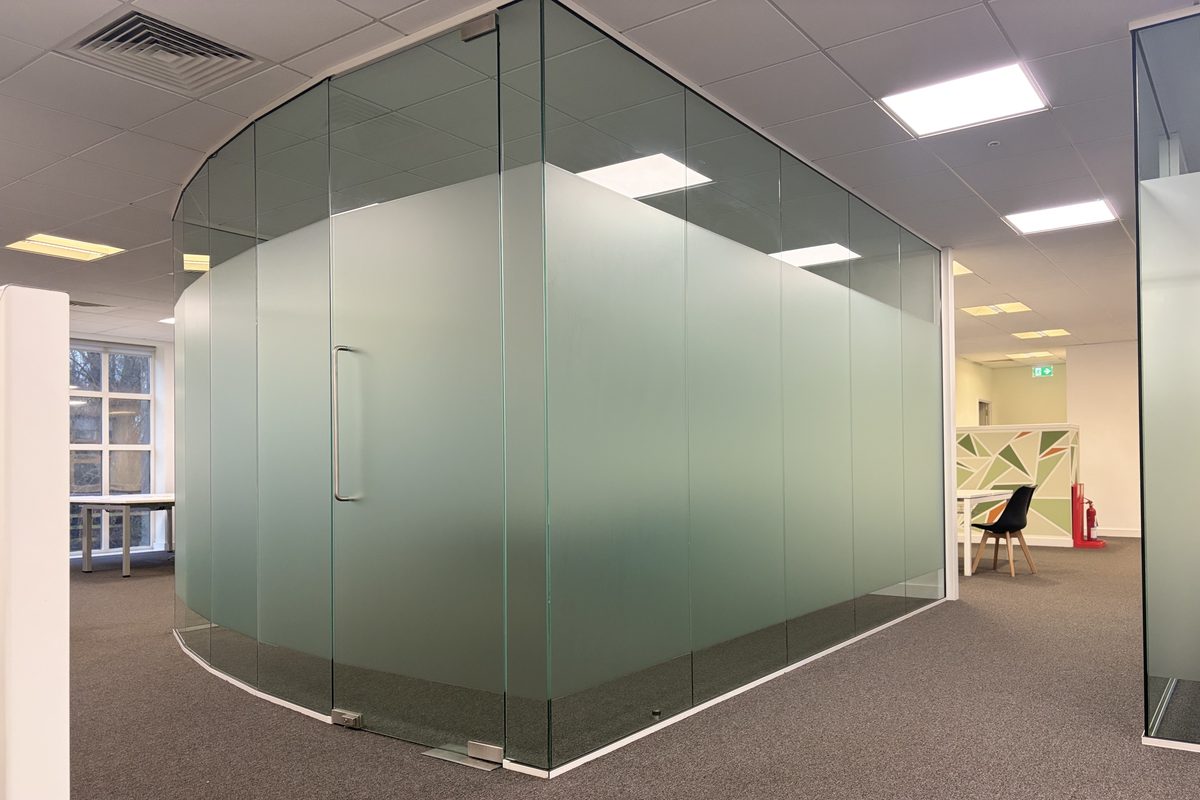
Frosted film on an office partition, giving full privacy while keeping the room light.
The main types of window film
Solar control and heat reduction film
The most popular film for both homes and commercial buildings. Solar control film rejects up to 80% of the sun's heat and 99% of UV, without making the room dark. It is the answer for south and west-facing rooms that become unusable by midday, conservatories that overheat in summer, and offices where the blinds stay shut all year. For businesses it also cuts air conditioning costs and helps meet workplace temperature obligations. Full detail on the solar window film page.
Frosted and privacy film
Frosted film gives you privacy without losing natural light, which is why it is the go-to for bathrooms, ground-floor windows overlooked from the street, front-door glazing and office partitions. Unlike reflective privacy film, frosted film works day and night. See the frosted window film Cambridge page for finishes and pricing.
Decorative film: reeded, patterned, gradient, coloured and textured
Decorative films let you add character or branding to glass. Reeded film mimics expensive fluted glass; patterned and etched films suit meeting-room partitions and shopfronts; gradient film is private at eye level and clear above; coloured and textured films add tone and depth. These are covered on the reeded, patterned, gradient, coloured and textured film pages.
Gradient film: private at eye level, clear glazing above for natural light.
Safety and security film
Safety film holds glass together if it breaks, reducing injury risk and slowing forced entry. It is often required in commercial premises to bring existing glazing up to safety glass standards without replacing it, and it is used in schools, healthcare settings and retail. This is one of the most common reasons facilities managers call an installer.
Comparing window film types
Every film type solves a different problem, and most projects end up combining two or three across a property. This table is a quick reference for which film to consider first.
Film type
Best for
Light impact
Typical lifespan
Solar control
Overheating rooms, high glazing, cooling costs
None — stays clear
10-15 years
Frosted / privacy
Bathrooms, front doors, office partitions
Diffuses light, stays bright
10-15 years
Gradient
Ground-floor windows needing privacy only at eye level
Clear above the gradient line
10-15 years
Reeded / textured
A premium, decorative alternative to real fluted glass
Up to 80% of solar heat rejected by professional solar control film, without darkening the room or changing how the glass looks from outside.
Window film for the home
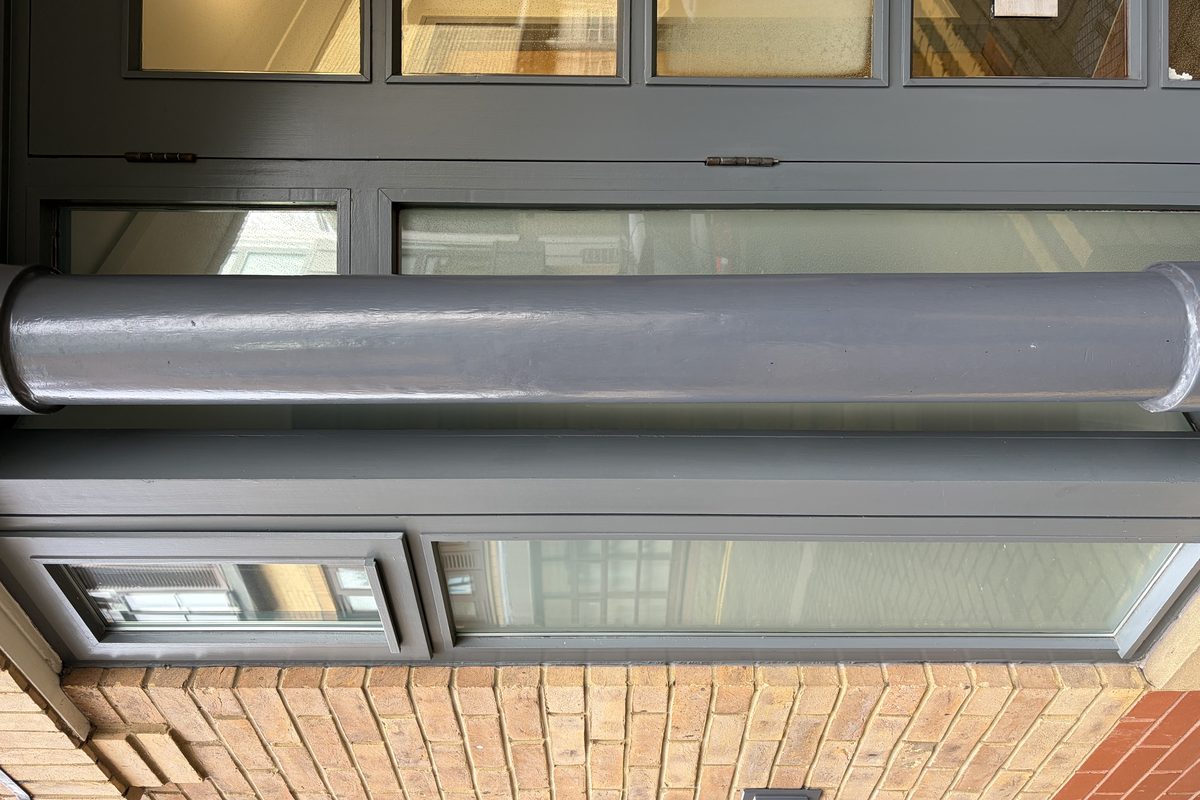
The three problems homeowners most often solve with window film are heat, privacy and fading. A single overheating room can be transformed with solar film, no air conditioning needed. A bathroom or front-facing living room gets full privacy with frosted or gradient film while keeping the light. And because film blocks 99% of UV, it protects furniture, flooring, artwork and kitchens from fading, which matters if you have recently had a kitchen wrapping project or new flooring you want to protect.
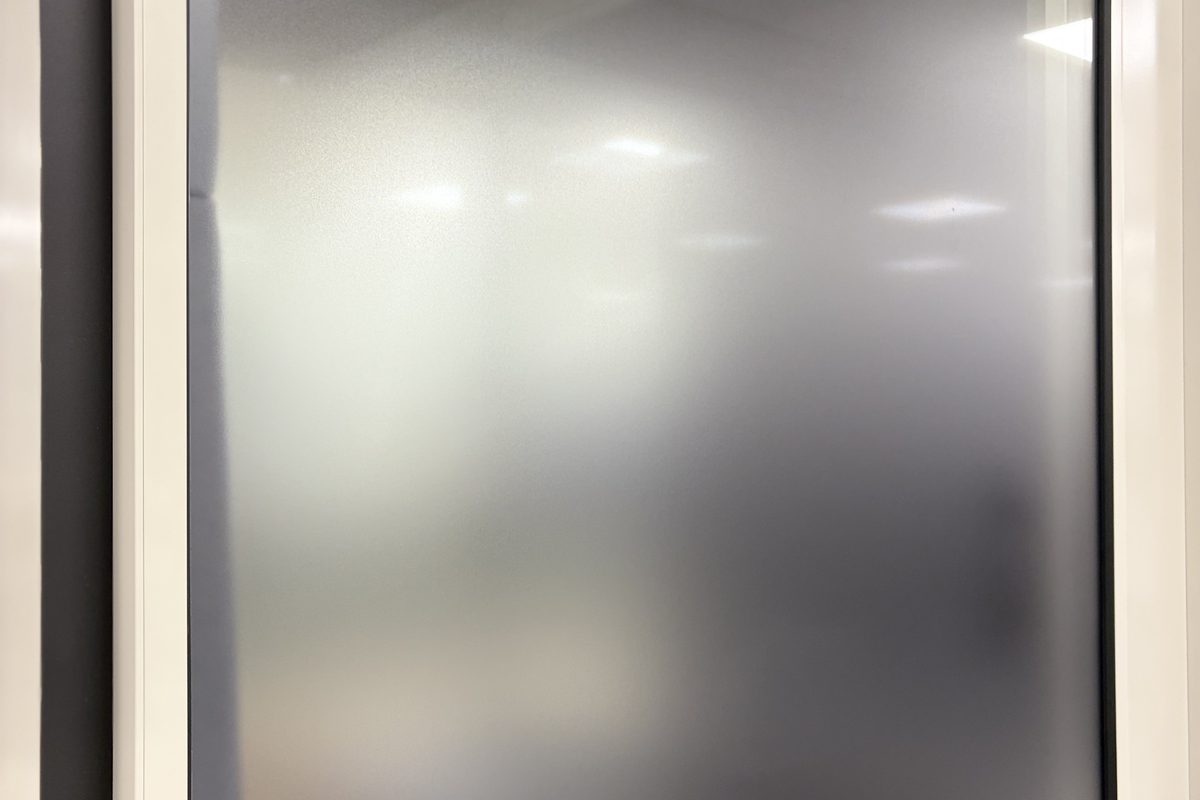
Privacy film fitted to a Cambridge business HQ, softening sightlines without losing daylight.
Window film for commercial premises
Commercial window film does everything domestic film does, at scale, with extra considerations. Solar control cuts cooling costs across large glazed elevations and improves staff comfort. Privacy and manifestation film brings meeting rooms and partitions in line with expectations and safety glazing rules. Decorative and branded film turns plain glass into a marketing surface. And it is almost always installed out of hours or floor by floor to avoid disrupting the business. Commercial window film pairs naturally with wider office refurbishment work, and Velfi delivers commercial projects nationwide.
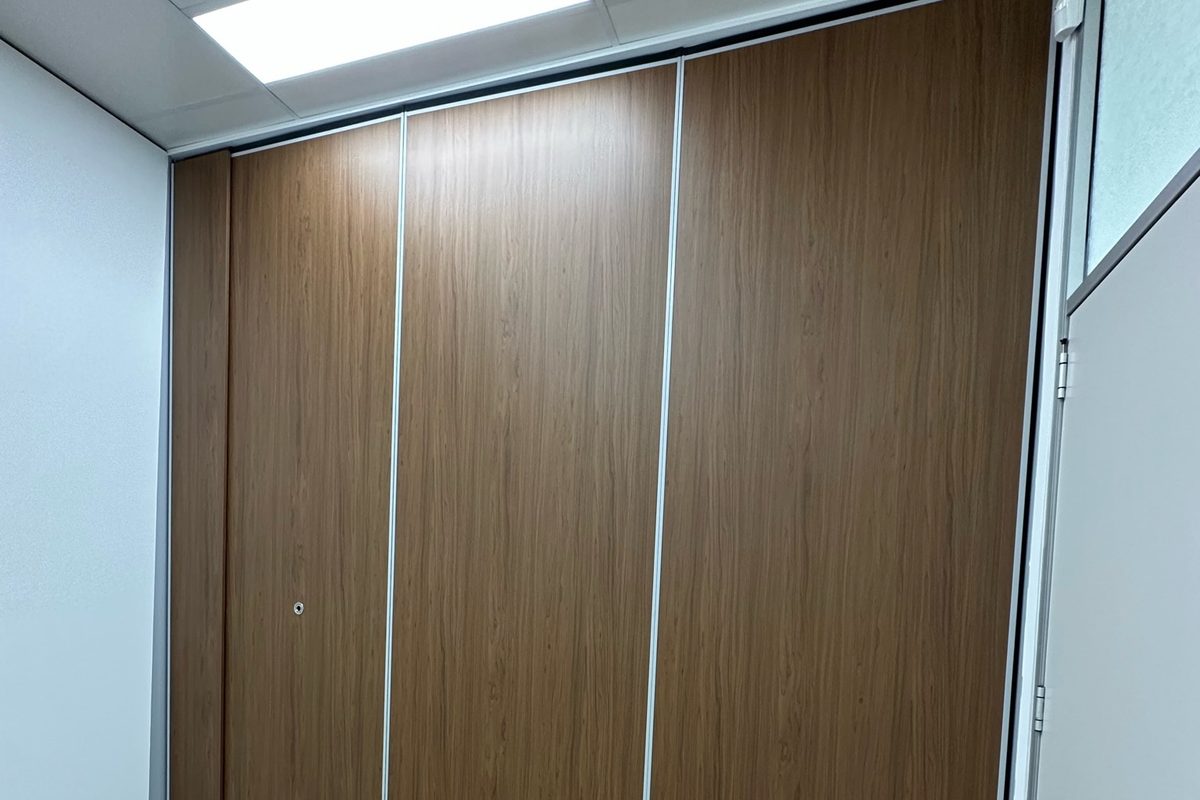
A glazed office partition finished with film as part of a wider refurbishment.
How much does window film cost?
Cost depends on the film type, the size and number of panes, and access. Film prices vary so much that we do not give a figure before we understand the job. We suit the film type to your goals, specify the right product and fit it to your budget first. Every Velfi quote is fixed in writing before work starts, with no provisional sums. Send a photo of the windows and rough sizes and a fixed quote comes back within 24 hours.
The installation process, step by step
Professional installation is what separates a result that lasts a decade from one that bubbles within months. Here is what actually happens on the day, whether it's a single bathroom window or a full office elevation.
1. Survey and film selection
Photos and rough measurements are enough for an initial fixed quote. For commercial projects or unusual glazing, a short site visit confirms the glass type, since some films are unsuitable for certain double-glazed or toughened units and this has to be checked before anything is ordered.
2. Glass preparation
Every pane is cleaned with a specialist solution that strips away residue invisible to the eye but which causes bubbling if left behind. This step is the one most commonly skipped by DIY installs and cut-price fitters, and it is the single biggest predictor of whether a film lasts ten years or ten months.
3. Cutting and application
Film is cut to the exact pane size, then applied wet using a slip solution that allows it to be positioned accurately before being squeegeed down, removing all air and moisture from underneath. Correct technique here avoids the visible lines and bubbles that give away an amateur job.
4. Edge sealing and finishing
Every edge is trimmed and sealed to stop moisture getting underneath the film over time, which is what causes lifting at the corners. On commercial jobs this is inspected pane by pane before sign-off.
5. Curing and handover
The film needs a short curing period as the remaining moisture evaporates, during which some light haze or small water droplets are completely normal and will clear within a few days to a couple of weeks depending on temperature. The room or office is usable immediately; only the fully clear finish takes a little longer to settle in.
Caring for your window film
Properly installed window film needs very little upkeep. Clean it with a soft cloth or squeegee and a mild soap and water solution or a purpose-made film-safe cleaner. Avoid ammonia-based glass cleaners, abrasive sponges and scrapers, which can scratch the surface or degrade the adhesive over time. There is no drying time and no special maintenance schedule required. If a pane is ever damaged, individual sections can be replaced without redoing the whole window, which is one of the practical advantages over full glazing replacement.
Common questions
Questions people actually ask.
For most homes with an overheating room, a privacy problem or fading furniture, yes. Window film installs in a day and lasts years, without replacing glazing or fitting blinds and shutters. The main situations where it pays off are south-facing rooms that overheat, ground-floor windows overlooked from the street, and bathrooms with clear glazing.
Quality professionally-installed window film lasts 10 to 15 years or more. Cheap DIY film bought online often fails within a year because the glass is not prepared correctly and the edges are not sealed, which is what causes bubbling and peeling.
Solar control film reduces heat gain in summer, and some low-emissivity films also help retain heat in winter, improving comfort year round. Privacy and decorative films work identically regardless of season.
Most glass, yes, but the film has to be matched to the glazing to avoid thermal stress, especially on double and toughened units. A proper survey checks this before anything is ordered, and if a particular film is not safe for your glass, you will be told.
The films are often the same products, but commercial projects add considerations like fire ratings, manifestation for safety glazing regulations, out-of-hours installation to avoid disrupting trade, and larger-scale solar control to cut cooling costs. Velfi handles both.
Standard reflective privacy film works during the day when it is brighter outside than in. At night, when interior lights are on, that reverses. For genuine round-the-clock privacy, frosted or gradient film is the better choice because it obscures the view at all times.