Scratched, dated lift? Refurbish it or replace it.
A new lift averages around £80,000. Most lifts that look tired don't need one. Here's how to tell the difference, what each option costs, and how long each one keeps the lift out of service, from someone who wraps lift interiors.
By Oscar Dean · Published 20 November 2026
If the lift runs reliably and passes its inspections, and the problem is scratched stainless, peeling laminate or a colour scheme from 2005, you don't need a new lift. You need a new interior. That can mean new panels from a lift company, a week or two out of service, or wrapping the panels you've got over a weekend. This guide covers all four routes, including the ones we don't do.
Does the lift need replacing, or does it just look old?
Start with the machinery, not the panels. The person to ask is your lift maintenance contractor, or a lift consultant on a bigger building. Passenger lifts are thoroughly examined at least every six months under LOLER, so the latest report will already say a lot.
Signs the problem is mechanical: regular breakdowns, the car stopping out of level with the floor, doors that struggle, parts that are getting hard to source, or defects flagged in the examination report. That's a job for the lift company, and no amount of new surface will fix it.
Signs the problem is cosmetic: scratches and scuffs, peeling laminate, chipped edges, graffiti, or a finish that makes the whole building look older than it is. The lift works. It just doesn't look like it does. That's the case where you have cheaper options.
What are the options, and what does each one cost?
There are four routes, from the biggest job to the smallest. The costs below are published averages, not quotes, and every building is different.
Option
What changes
Time out of service
Cost guide
Full replacement
A new lift
Several weeks or more
Around £80,000 average1
Full refurbishment (modernisation)
Controller, drive, doors and car
4 to 8 weeks per lift2
Around £65,000 average1
New car interior from a lift company
New wall panels, ceiling and finishes
1 to 2 weeks per lift2
Quoted per lift
Wrapping the existing interior
The surface of the panels, doors and landing doors
A weekend or an overnight slot
Depends on the finish, and on whether you choose an abrasion-resistant film. Fixed quote from photos
1. Flat Living, based on a four-floor traction lift. Taller buildings cost more. 2. VME Elevators guide to lift refurbishment.
The first two fix the machinery. The last two only change how the car looks, so they're only the right answer when the machinery is sound. Wrapping usually costs least because nothing is fabricated, delivered or thrown away: the film goes onto the panels you already have.
What moves the price of a wrap is the finish and the film range. In a busy lift, an abrasion-resistant (AR) film is worth considering for the car walls and doors. It costs more than standard architectural film, but it stands up far better to bags, trolleys and rings.
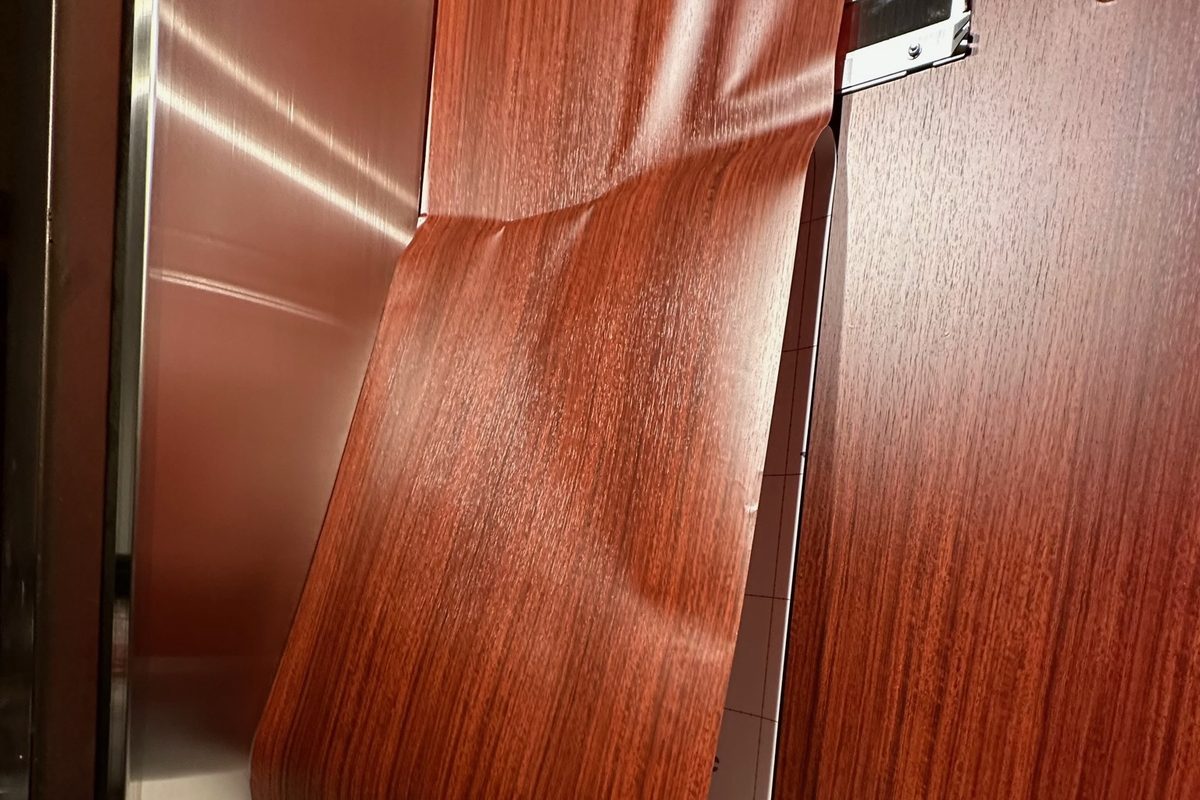
Film going onto the existing car panels. Nothing is removed from the lift.
How long will the lift be out of service?
For a wrap, usually one weekend or one overnight slot, depending on the size of the car and how many landing doors you want done. The lift is taken out of service on Friday evening and is back in use on Monday morning.
That's the main reason building managers choose it. In a block with one lift, a week without it means residents carrying shopping up the stairs and complaints in your inbox. We plan the dates with you and with your lift maintenance contractor, who isolates the lift safely before work starts.
What can be wrapped in a lift, and what can't?
Most of what people see can be wrapped. Some things should be left alone.
Can be wrapped
Left alone
Car wall panels
Buttons, displays and the control panel
Inside and outside of the car doors
Moving parts, door tracks and safety edges
Landing doors and frames on every floor
The floor, and usually the handrails
Lobby walls and surrounds
Panels that are badly dented or damaged
Brushed metal, dark timber, stone and solid colours are the most requested lift finishes. You can see them in the architectural film library, and there's more on the process on the lift wrapping page.
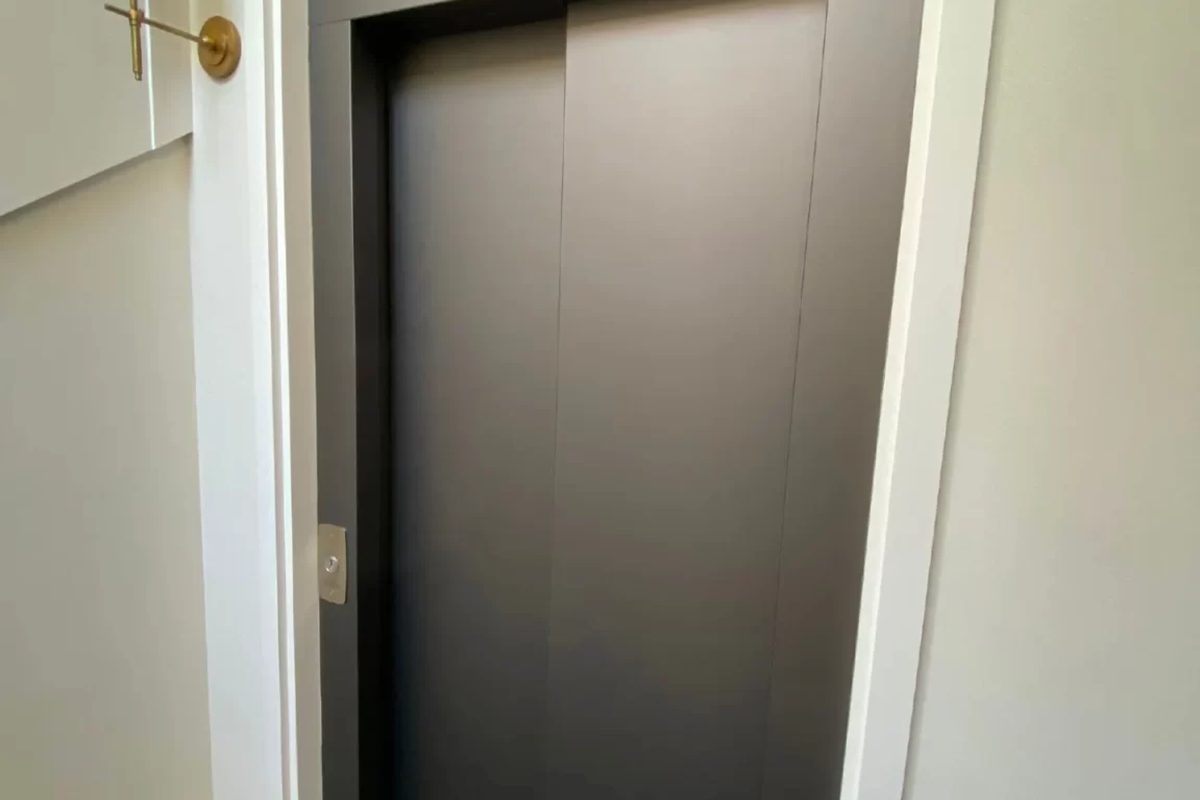
The same car after wrapping. The panels underneath are the originals.
Is film in a lift car safe from a fire point of view?
It has to be, and you should see the paperwork before anyone starts. The lift standard for new installations, EN 81-20, sets minimum reaction-to-fire classes for car walls, floors and ceilings, using the European system in EN 13501-1.
The architectural films we use in lifts are tested and classified to that same system. The certificate and data sheet for the exact film are available on request, so you, your lift contractor or your fire risk assessor can check them before anything is fitted. The guide to architectural film fire ratings explains what the classes mean.
When is wrapping the wrong answer?
Sometimes, and it's better to know before you spend anything.
The machinery is near the end. If the lift is due for modernisation in the next year or two, put the money towards that. A new car interior is often part of the job anyway.
The panels are dented. Film follows the surface it's on. It hides scratches and colour, but a deep dent will still show. Badly damaged panels need replacing.
The layout needs to change. Film changes how the car looks. It doesn't move a handrail, add a mirror or change the control panel. If the lift needs accessibility work, that's the lift company's job.
It's a hard-working goods lift. Pallet trucks and cages will scuff any finish. Film can still work on the walls above trolley height, with kick plates or protective panels lower down.
In a block of flats, who decides and who pays?
Usually the freeholder or managing agent decides, and the cost goes through the service charge. If any one leaseholder's share of a job will be more than £250, the landlord has to run a Section 20 consultation first, which adds weeks before work can start.
A wrap is a much smaller job than new panels or a modernisation, so depending on how many flats share the cost, it can come in under that threshold. Worth checking before you assume the lift has to wait for next year's budget.
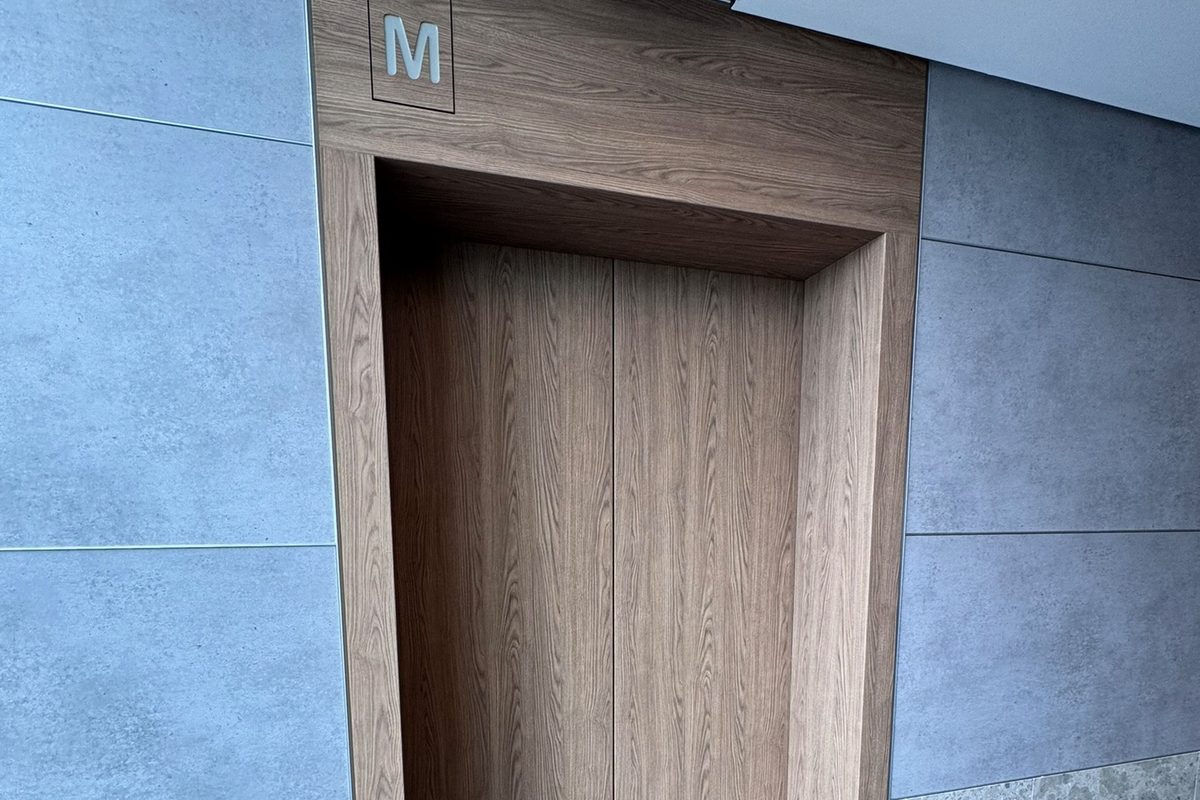
A landing door surround. Doing every floor makes the whole core look new, not just the car.
If you manage a building near Cambridge, send photos of the car, the landing doors and the number of floors. You'll get a straight answer on whether wrapping suits your lift, and a fixed quote within 24 hours.
Written by Oscar Dean, founder of Velfi Interiors. Nearly 10 years fitting architectural film and window film on homes and commercial sites. About Oscar
Common questions
Quick answers to common questions.
It depends on how much of the lift you change. A full refurbishment of a four-floor traction lift averages around £65,000 and a full replacement around £80,000, according to Flat Living. A new car lining from a lift company costs less, and wrapping the existing panels usually costs least, because nothing is made or removed. The price of a wrap depends on the finish you choose and whether you go for an abrasion-resistant film. Send photos and the number of floors for a fixed quote.
Not for the wrapping itself. The film goes onto the existing panels, with no mechanical or structural work. The lift does need taking out of service safely, so that's arranged with your lift maintenance contractor before we arrive.
The films we use in lifts are tested and classified to EN 13501-1, the same European system the lift standard EN 81-20 uses for car walls and ceilings. The certificate and data sheet for the exact film are available on request, so you or your lift contractor can check it against the building's requirements before anything is fitted.
Architectural film carries a 10-year warranty when it's professionally fitted. In a busy passenger lift the car doors and the wall by the controls take the most wear, so those are the areas to check first if the lift also carries trolleys or deliveries.
Yes. Velfi is based in Wilburton near Ely and covers Cambridge and Cambridgeshire, and commercial work like lifts is available nationwide. Send photos of the car, the landing doors and the number of floors to get a quote.
Tired lift, working machinery?
Send a photo. Get a straight answer.
Photos of the car and landing doors, plus the number of floors. You'll hear whether wrapping suits your lift, and get a fixed quote within 24 hours.