One-way window film. When it works, and when it doesn't.
One-way mirror film is one of the most searched-for window films in the UK, and one of the most misunderstood. It does a great job in daylight. At night it does the opposite of what most people expect. Here's how it really works, from someone who fits it.
By Oscar Dean · Published 10 November 2026
If you're looking at one-way film, you probably want one of two things: privacy without blinds, or a room that doesn't overheat. One-way film is very good at the second and only half good at the first. This guide answers the questions people search for most, then points you to the film that fits your window.
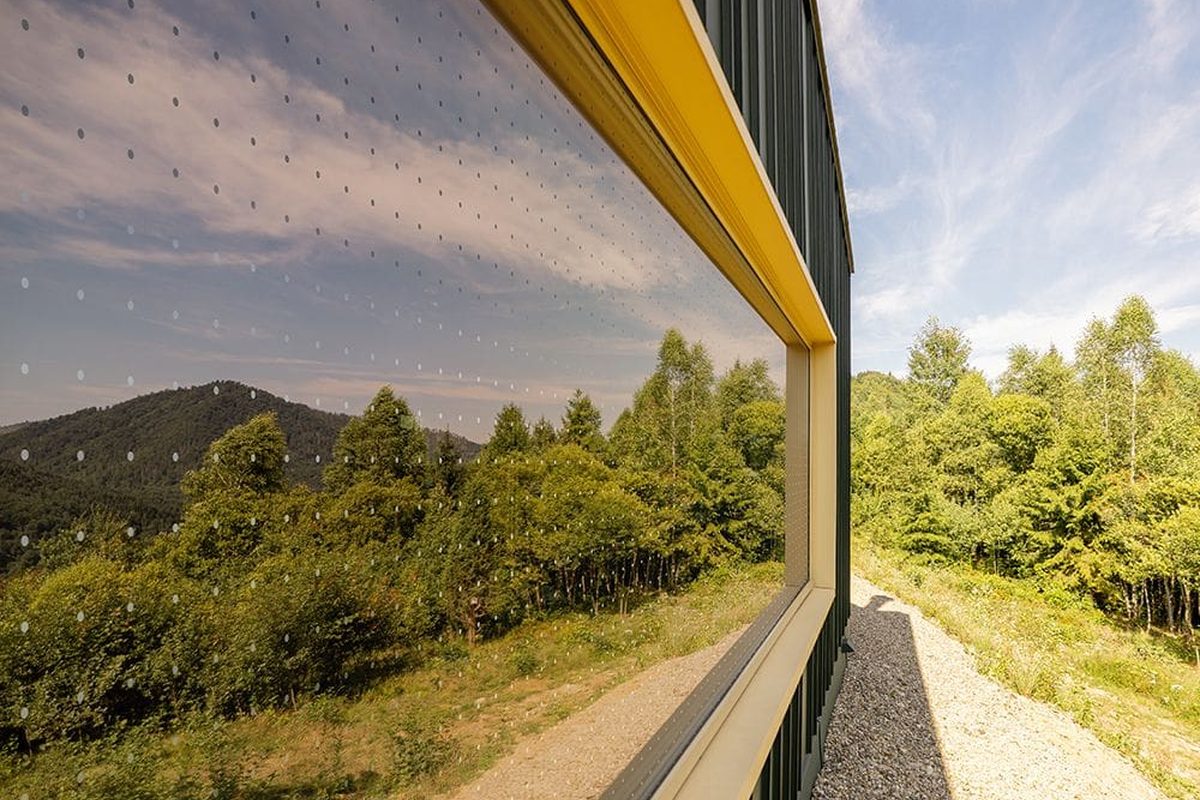
One-way window film is a reflective, mirror-like film applied to the glass. In daylight the outside looks like a mirror, so people can't see in, while you can still see out. It's also called mirror film or reflective privacy film, and most versions cut a lot of solar heat at the same time.
It works because of light, not magic. A mirrored surface reflects most of the light that hits it, and the brighter side wins. When it's brighter outside than in, people outside see their own reflection and you see straight through.
Does one-way window film work at night?
No. At night, once your lights are on, the inside of the room is brighter than the street, so the effect flips. People outside can see in, and you see your own reflection looking out. Every one-way film behaves like this, whichever brand it is.
So for a bedroom, a bathroom or a living room you use after dark, one-way film on its own isn't a privacy fix. Add a blind for the evening, or choose a film that works the same at any hour, like frosted privacy film.
Is there a one-way window film that works day and night?
Not in the way most people hope. Films sold as "day and night" usually mean you can still see out at night with less reflection on your side. They don't stop people seeing in once your lights are on. If a product promises full privacy at night with clear glass, ask to see it at night before you buy.
If you need privacy around the clock and want to keep the light, the honest options are frosted film, gradient film (private at eye level, clear above) or reeded film. They obscure the view in both directions, day and night.
Mirror, black or non-mirrored one-way film: what's the difference?
Silver mirror film gives the strongest daytime privacy and the most heat rejection, with an obvious mirrored look from outside. Black or dark one-way film looks like tinted glass instead and relies on darkness more than reflection. Non-mirrored films keep a more natural look but give weaker privacy. All three have the same night-time limit.
Film
Daytime privacy
Night privacy
Look from outside
Heat rejection
Silver mirror
Strong
None with lights on
Mirrored
High
Black or dark one-way
Good
None with lights on
Dark tinted glass
Medium to high
Non-mirrored
Light
None with lights on
Close to normal glass
Varies by film
Frosted (for comparison)
Strong
Strong
Etched glass
Low
Darker and more reflective films also let less light into the room. The most reflective ones pass around 20% to 40% of visible light, so samples on your own glass are worth more than any spec sheet.
Does one-way window film block heat?
Yes, and this is where it really earns its place. Reflective films bounce a large share of the sun's heat back out before it reaches the room, which is why they're common on south and west-facing offices, shopfronts and conservatories. If heat is your main problem and privacy is a bonus, a reflective solar control film is often the right answer.
Reflective solar film cuts heat and glare in daylight, which is when one-way film works best.
Which window film gives the most privacy?
For privacy day and night, frosted film is the strongest, followed by reeded and gradient film. One-way mirror film gives strong privacy in daylight only. The right choice depends on when you use the room and whether you want to see out.
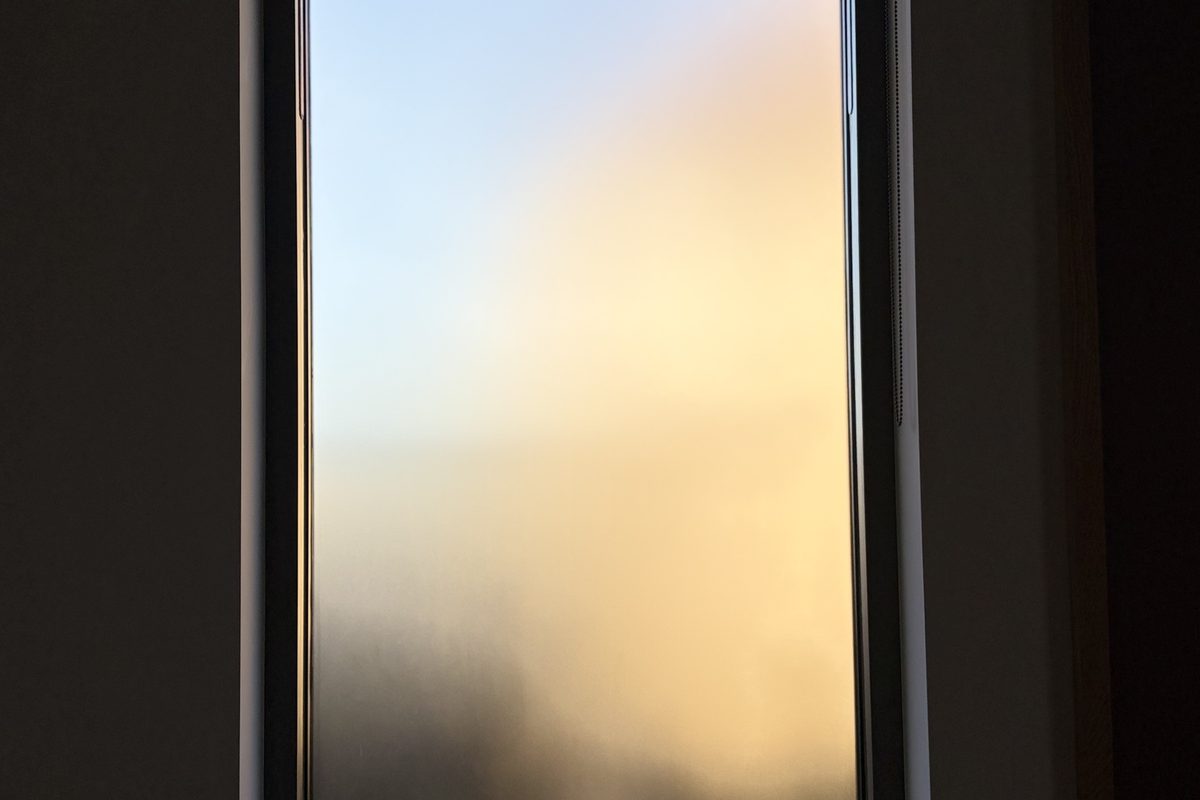
Privacy film on a ground-floor window. Unlike mirror film, it works the same after dark.
Can one-way film go on double glazing or patio doors?
Usually yes, but the glass needs checking first. Mirror and dark films absorb more heat than frosted film, and on some sealed double-glazed units, or large patio doors in full sun, that adds stress to the glass. Manufacturers set out which glass types their film and warranty cover, so the film is matched to your glass before anything is fitted.
Exterior-grade versions are sometimes the better choice on double glazing, because they reflect the heat before it reaches the glass.
Should you fit one-way film yourself?
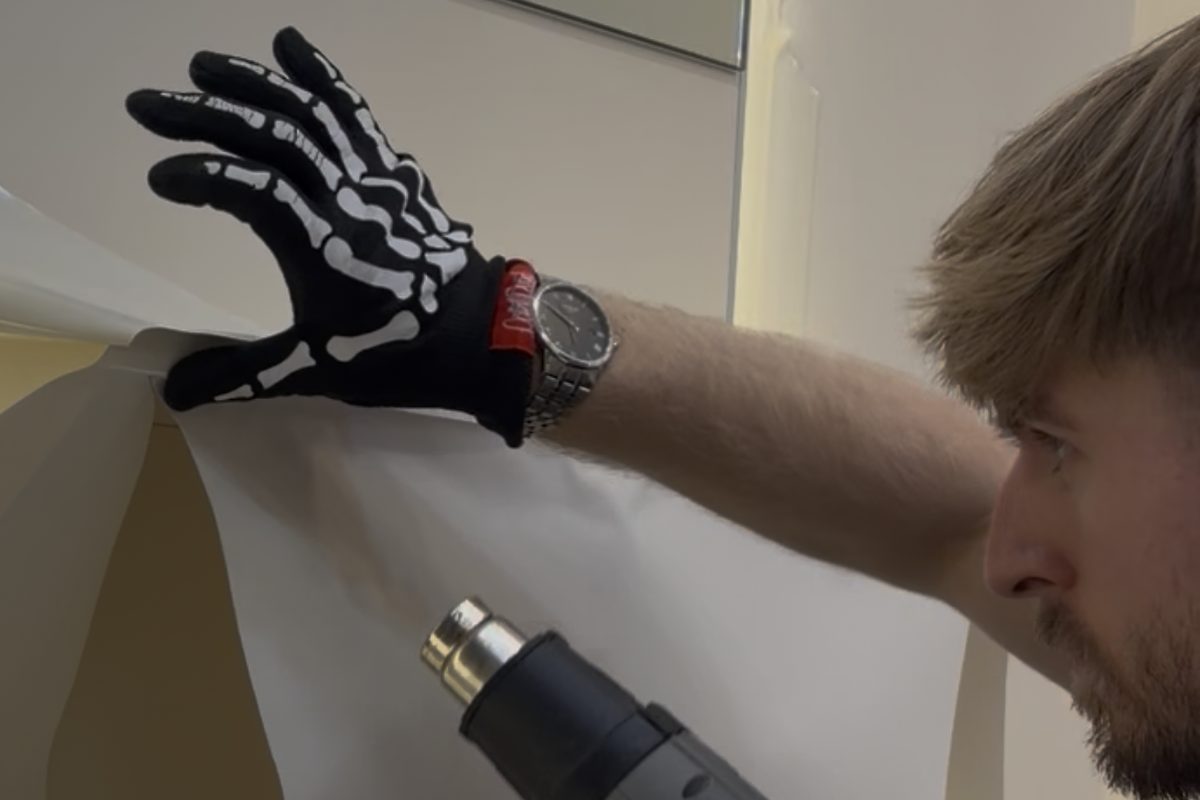
On a small single-glazed pane, a DIY roll can be fine. On double glazing, large windows or anything you'll look at every day, a professional fit is worth it: the wrong film can stress the glass, and reflective film shows every bubble, crease and speck of dust underneath it.
If you're near Cambridge, send a photo of the window and tell us whether privacy, heat or both is the problem. You'll get a recommendation and a fixed quote within 24 hours, and the full range of window film we fit is there to compare.
Written by Oscar Dean, founder of Velfi Interiors. Nearly 10 years fitting architectural film and window film, from homes in Cambridgeshire to NHS and commercial sites. About Oscar
Common questions
Quick answers to common questions.
Yes, once your lights are on. The film only works when it's brighter on the outside. At night the room is the bright side, so people outside can see in. Add a blind for the evening, or use frosted film if you need privacy at all hours.
A little, depending on the film. Lighter reflective films change the room only slightly, while the most reflective and darkest films let through around 20% to 40% of visible light. Samples on your own glass show the difference before you commit.
Yes. Professionally fitted film can be removed later without damaging the glass, which suits rented homes and offices. Older or sun-baked film takes longer to remove, but it still comes off cleanly with the right method.
Professionally fitted film is covered by a 10-year warranty. How long it looks its best depends on the film and on whether it faces strong sun all day, which is why the film is chosen for your window rather than off a roll.
Yes. Velfi fits one-way, reflective and solar control film across Cambridge and Cambridgeshire, from homes to offices and shopfronts. Send a photo of the glass and you'll get a recommendation and a fixed quote within 24 hours.
Not sure which film you need?
Send a photo. Get a straight answer.
Tell us what's bothering you: privacy, heat, glare or all three. You'll get the right film for your glass and a fixed quote within 24 hours.